


Get in touch
Work location
B-810/811, World Trade Tower (WTT), Makarba, Sarkhej Gandhinagar Highway, Ahmedabad,
Gujarat, India, 380015

Social link

DocuMind replaces manual document search and hallucination-prone chatbots with a RAG assistant that answers exclusively from a company’s own PDFs, policies and wikis, with every answer backed by an inline citation.
It was built end to end by the Amilek team as a product R&D initiative, from the background ingestion pipeline through the hybrid search and reranking layer that keeps answers accurate at scale. It’s built for support and operations teams who need a fast, verifiable answer instead of another tab of search results.

Teams spend hours a week searching internal PDFs, policies and wikis for information that’s already documented somewhere. Keyword search returns a pile of documents to sort by hand, and general-purpose chatbots answer from memory when the real answer isn’t in their training data, producing confident responses that are simply wrong.

DocuMind restricts every answer to a company’s own document set and shows exactly which passage it came from. Hybrid retrieval and reranking surface the right passages across large, growing collections, while ingestion runs in the background so the system stays current without manual reindexing.

Instead of asking a general-purpose chatbot to answer from memory and risk an invented response, DocuMind answers strictly from a company’s own documents, with every answer tied back to the exact source passage. Incoming documents are processed and indexed in the background, so ingestion never blocks day-to-day use, even as the document set grows. Queries run through a hybrid retrieval layer that combines keyword and semantic search, then a reranking step narrows the results to the passages that actually matter before an answer is generated.
Every document moves through four stages before it can be part of an answer: processing, retrieval, reranking and generation. Splitting the pipeline this way keeps each stage simple, and means an in-progress ingestion never blocks someone asking a question that’s already indexed.

Chunks and embeds incoming PDFs, policies and wikis in the background, so large document sets are indexed without blocking search or chat.

Searches with both keyword and dense vector similarity, so a query surfaces relevant passages whether the match is on exact wording or meaning.
Reorders retrieved passages by relevance before they reach the model, filtering out near-misses so only the most useful context makes it through.
Produces an answer using only the retrieved passages and returns it with an inline citation, rather than filling gaps from the model’s memory.

Combines keyword matching with dense vector search, so DocuMind finds relevant passages whether a query matches exact terms or just the meaning.

A reranking step reorders candidate passages by actual relevance, so the model answers from the strongest evidence, not the first few matches.

Large document sets are chunked, embedded and indexed asynchronously, so adding hundreds of files doesn’t slow anyone down.

Every answer links back to the exact document and passage it came from, so a user can verify it in one click.

A chat-style front end lets support and operations teams ask questions in plain language rather than guessing at keywords.

Tracks document volume, query trends and citation activity, showing how the assistant is used and where the document base needs work.

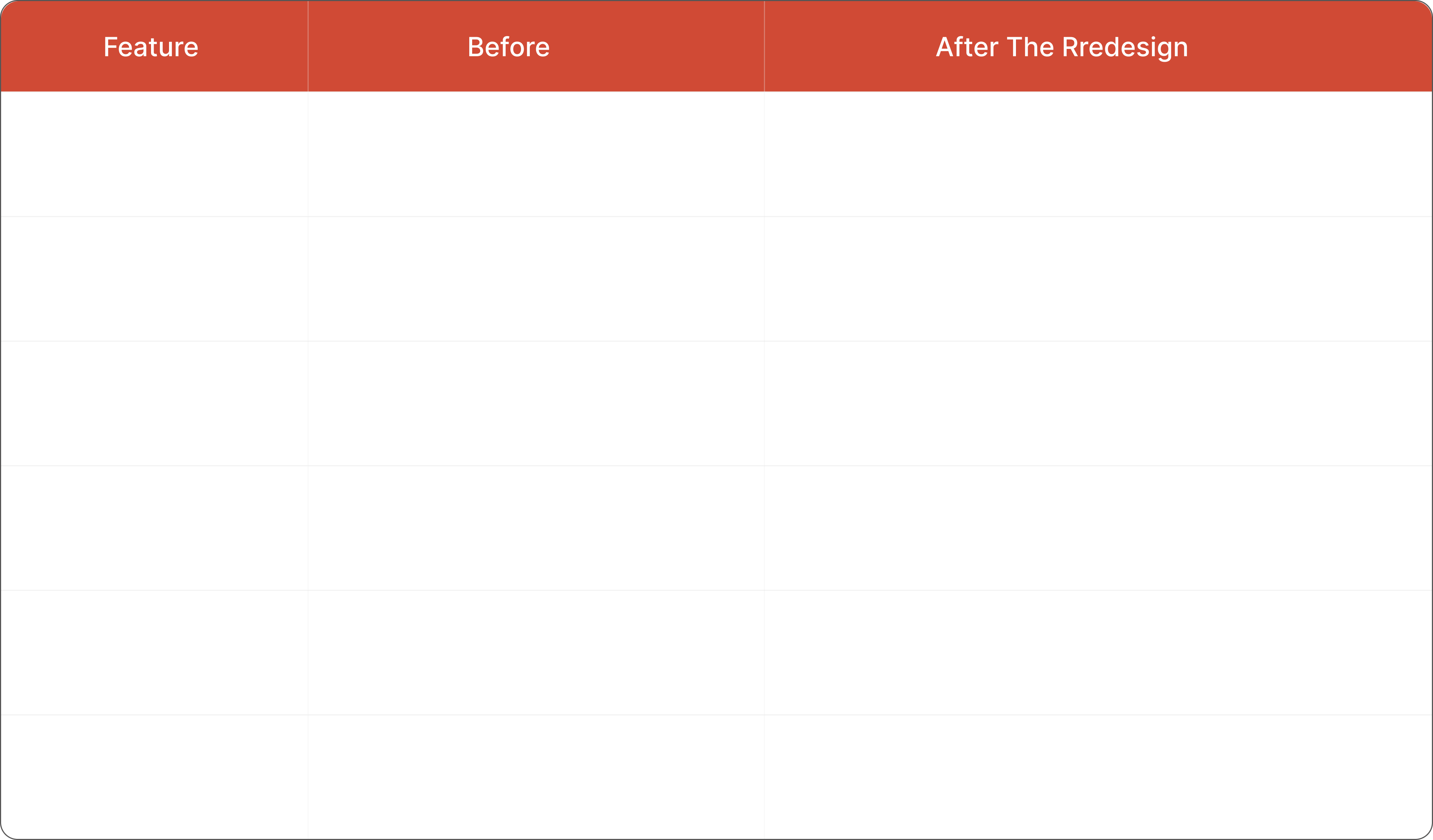
The aim was one answer a team could trust and check, not another list of results. Here is how DocuMind differs from the search it replaces.
Mapped the failure modes of generic chatbot search, hallucinated answers with no traceability, onto an ingestion, retrieval, rerank and generation pipeline.
Built the background chunking and embedding pipeline so large PDF, policy and wiki collections index without blocking active use.
Implemented combined keyword and dense vector search over the embedded document store to catch exact-term and meaning-based matches.
Added reranking ahead of generation, then constrained the model to answer only from reranked passages with an inline citation.
Built the conversational front end and the dashboard tracking document volume, query trends and citation activity.
Validated retrieval accuracy and ingestion throughput against large, growing document sets, well beyond a small demo collection.



