



AI Transcription & Meeting Intelligence
Turn calls, meetings, and video into accurate, searchable text your team can actually act on.
Most businesses already record their calls and meetings, but the value sits locked in audio nobody has time to replay. We turn every conversation into accurate, searchable text, with speakers separated and the summaries, decisions and follow-ups pulled out automatically. Built for real workflows: call center QA, clinical notes, legal testimony, and more.
- Call centers and support teams that need call records, QA scoring, and compliance checks at scale
- Healthcare providers converting consultations into structured clinical notes and patient records
- Legal teams processing depositions, hearings, and client calls into searchable, citable text
- Sales and customer success teams who want every call summarized and logged in the CRM automatically
- Media, research, and education teams turning interviews, lectures, and video libraries into usable content
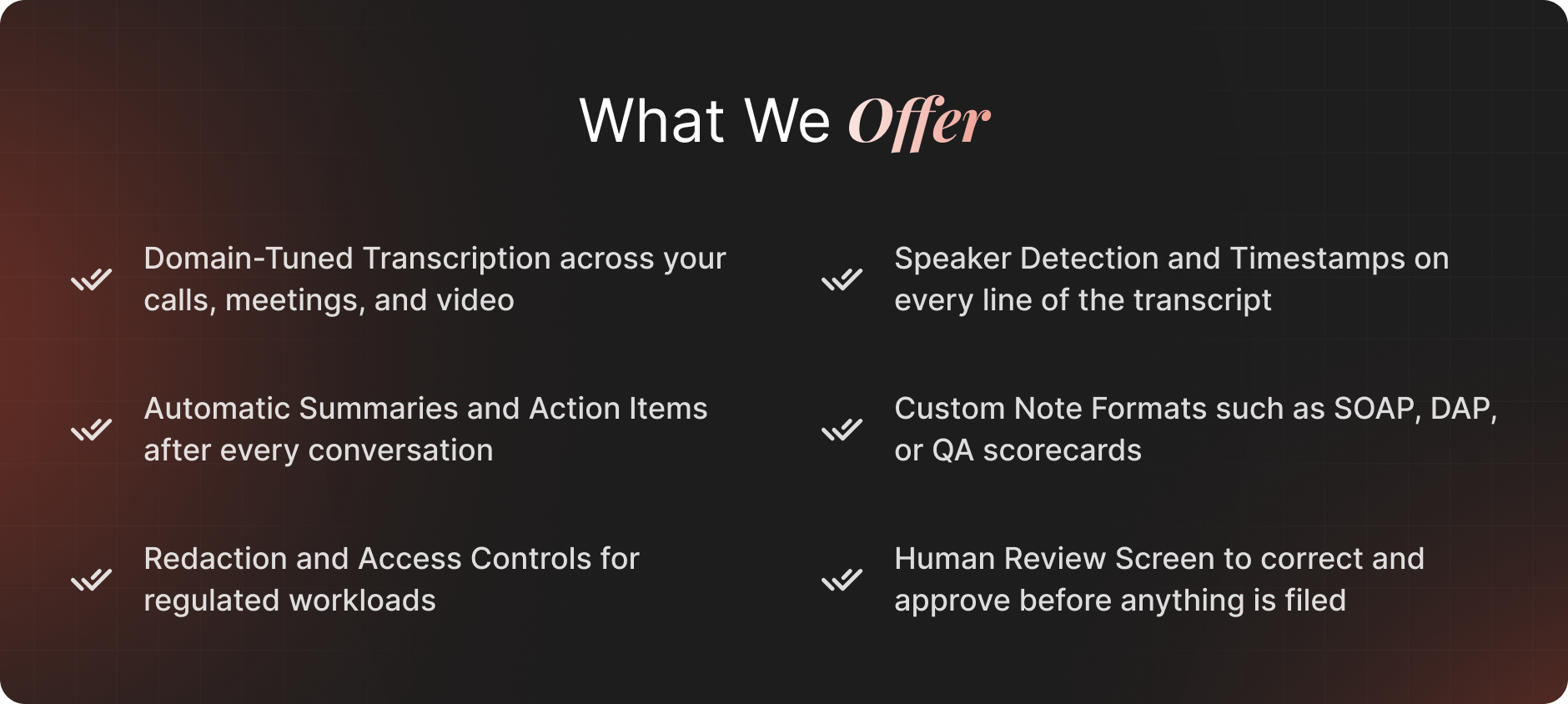
Teams use this to score support calls against a QA checklist, turn consultations into SOAP or DAP notes, and produce timestamped records of depositions and hearings. Others push meeting summaries straight into Slack or a project tool, make whole recording archives searchable, or subtitle video content. Speaker labels and timestamps mean anyone can jump straight to the moment a decision was made.
The pipeline runs on a leading speech-to-text engine like Whisper or Deepgram, with diarization, timestamping and vocabulary tuned to your domain. Audio comes in from your app, call system or meeting platforms, through a queued backend built for long files and high volume. An LLM layer adds summaries and structured notes, and regulated workloads get encryption, redaction, access control and audit logging.
Share where your audio comes from, in what formats, and a sample of real recordings so we can benchmark accuracy against your actual conditions. Tell us your domain vocabulary and the output you need, whether that’s a transcript, summary, or structured note. We’ll also want to know which systems the output should land in, and your requirements around retention and compliance.


