Ackuity
About
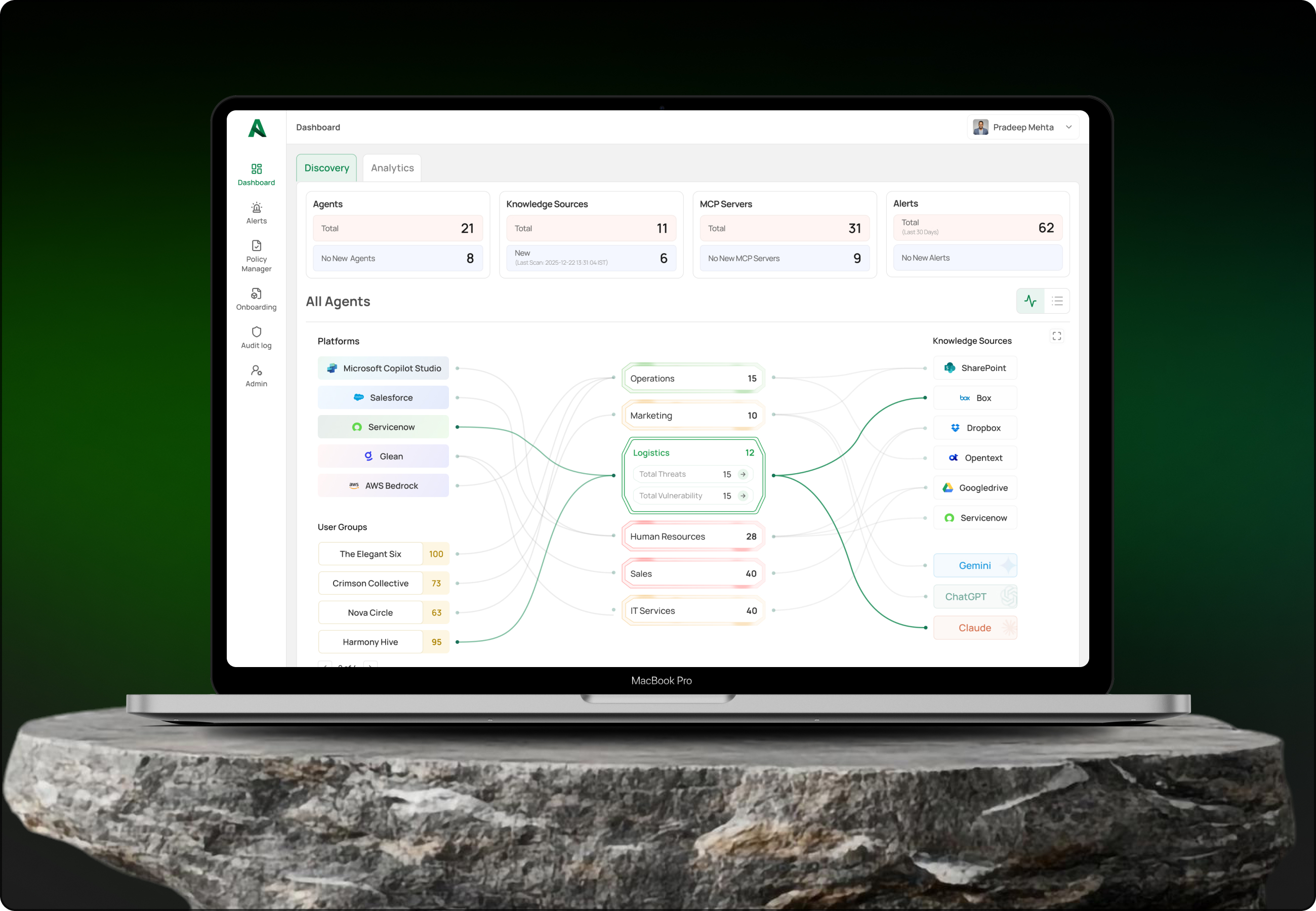
Ackuity delivers a robust security - monitoring platform tailored for “agentic” AI environments, offering real-time threat detection, response and oversight across AI agents and their interactions with users and backend systems. The dashboard empowers organizations to discover AI agents in their infrastructure, track agent behavior, monitor permissions and access, and enforce compliance through logging, anomaly detection and data - masking controls.
In redesigning the UI/UX and building the frontend, we focused on making these complex workflows accessible, intuitive and visually coherent. Our aim was to transform threat - monitoring data into clear, actionable insights through a cleaned up visual hierarchy, modular components and streamlined navigation.

Problem
Utilizes advanced AI analytics to detect anomalies, flag suspicious interactions, and enable quick, data -driven responses to potential security risks.

Solution
Provides tools for managing permissions, auditing agent actions, and ensuring compliance with internal and external security standards through real-time dashboards and detailed reporting.
From Concept to
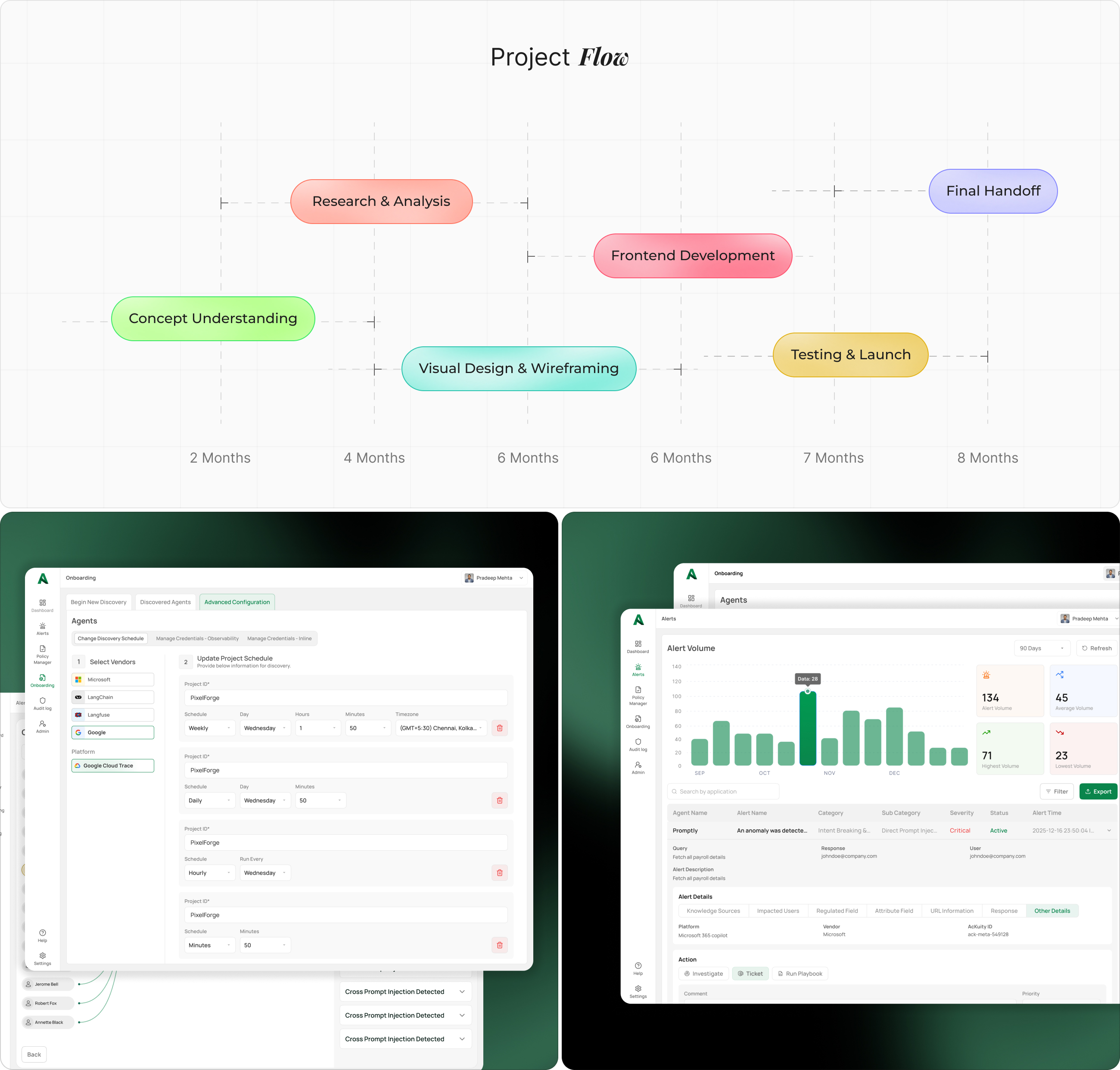
The experience blueprint was designed to map every stage of the user journey - from data discovery to threat analysis and resolution - ensuring a seamless flow between complex system interactions. The process involved defining how users engage with each module, what information they need at each step, and how the interface responds to their actions.
.jpg)
User
These insights guided the redesign strategy, helping define user personas, task flows, and interface priorities. Emphasis was placed on making complex data easily interpretable, ensuring that users could quickly identify anomalies, monitor agent activities, and respond to potential risks without friction.
User Interface
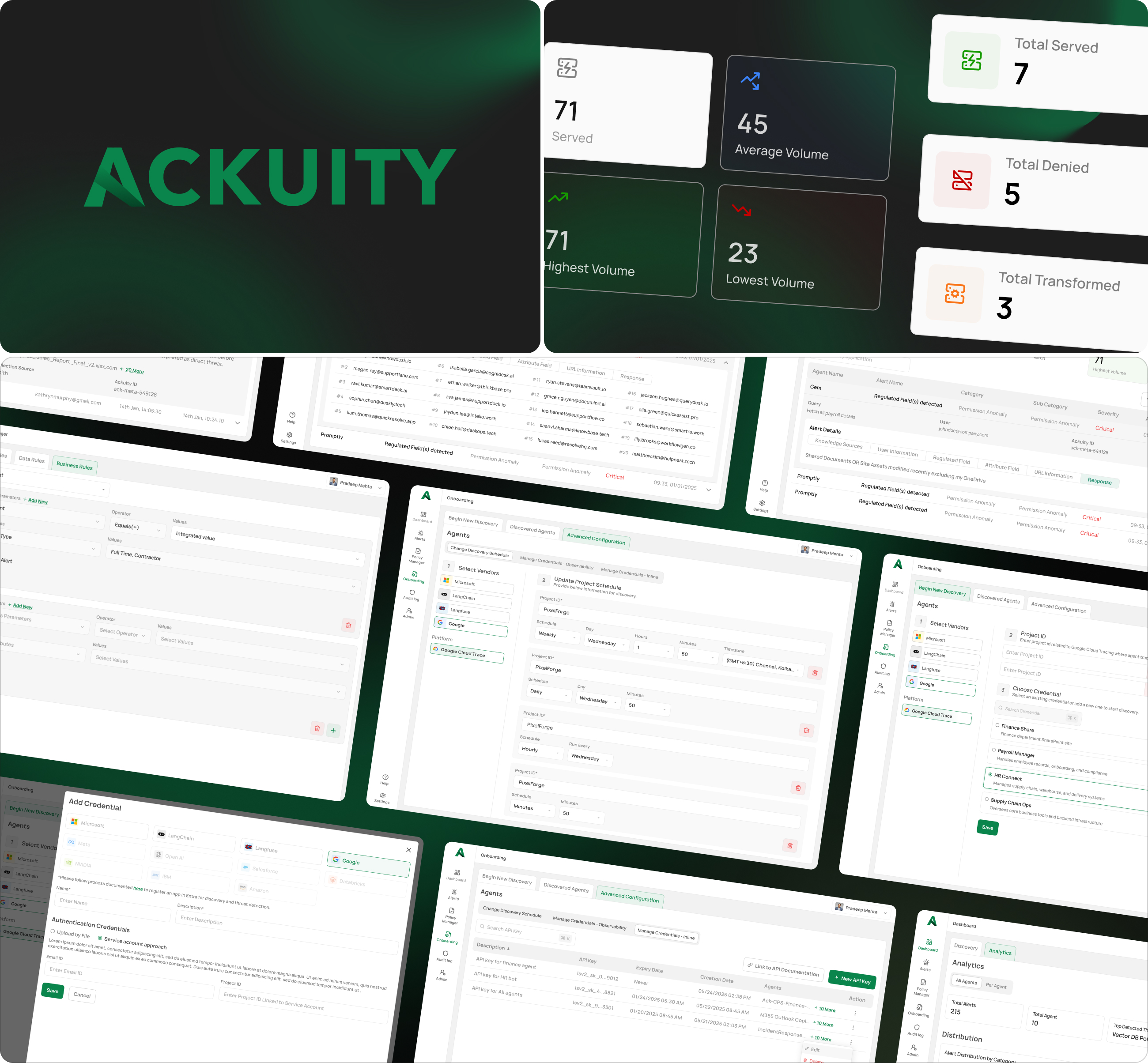
The web UI architecture of Ackuity was designed to support a scalable, modular, and performance - driven environment suitable for complex security analytics. The interface was developed using a component - based approach, ensuring that key modules - such as dashboards, agent monitoring panels, and data visualization charts - operate independently while maintaining design consistency.
A logical hierarchy was established to separate primary functions like threat monitoring and access control from secondary utilities such as filtering and settings. This architecture enables smooth data rendering, quick load times, and real-time interaction without visual lag. By integrating responsive layouts and reusable UI components, the system maintains stability across devices while allowing future updates or feature integrations with minimal rework.
Style
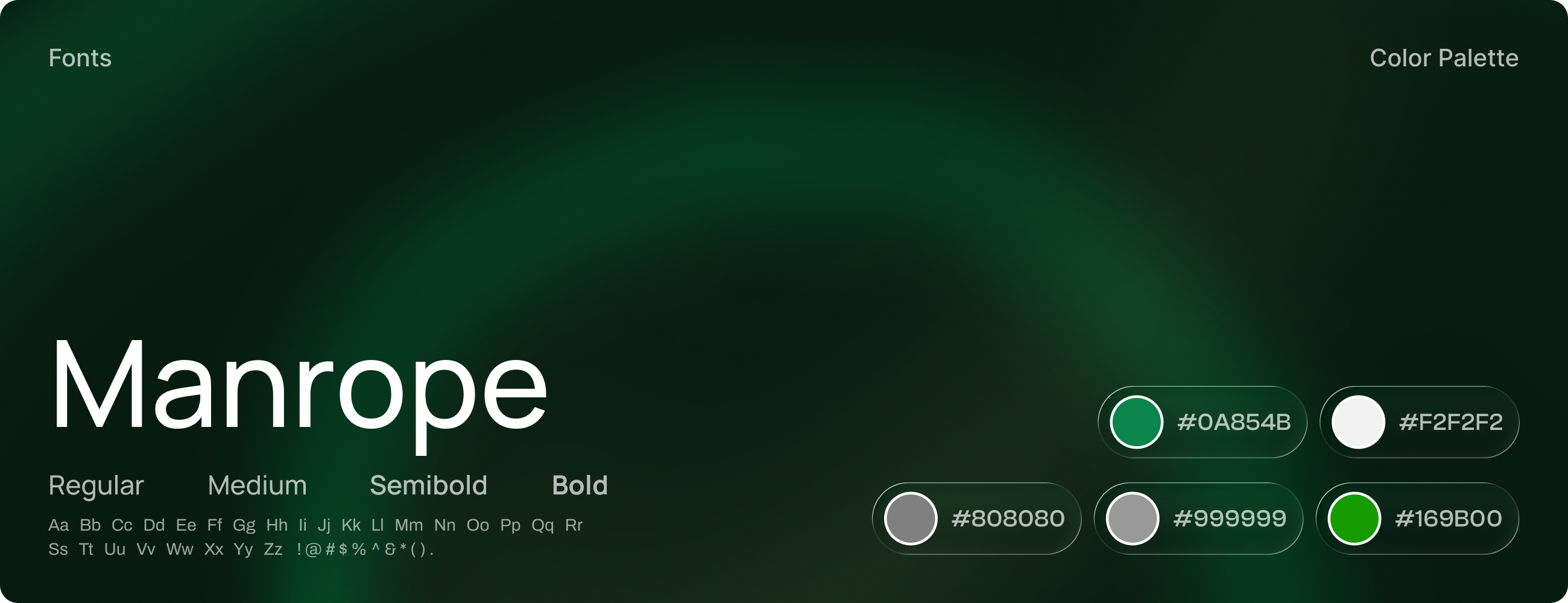
The visual design of Ackuity was built around a clean and confident aesthetic that reflects the platform’s focus on AI-driven cybersecurity. The core color palette centers on green, symbolizing trust, security, and system stability balanced with shades of gray and white to create contrast and maintain a professional tone. Icons were designed with a minimal, line - based style to ensure clarity at all scales and to complement the dashboard’s structured layout.
Consistent use of typography, spacing, and alignment helped establish a clear visual hierarchy, allowing users to focus on critical data points without distraction. Each design component followed a modular system, ensuring visual consistency across charts, buttons, and status indicators.
Software