Get in touch
Work location
B-810/811, World Trade Tower (WTT), Makarba, Sarkhej Gandhinagar Highway, Ahmedabad,
Gujarat, India, 380015

Social link

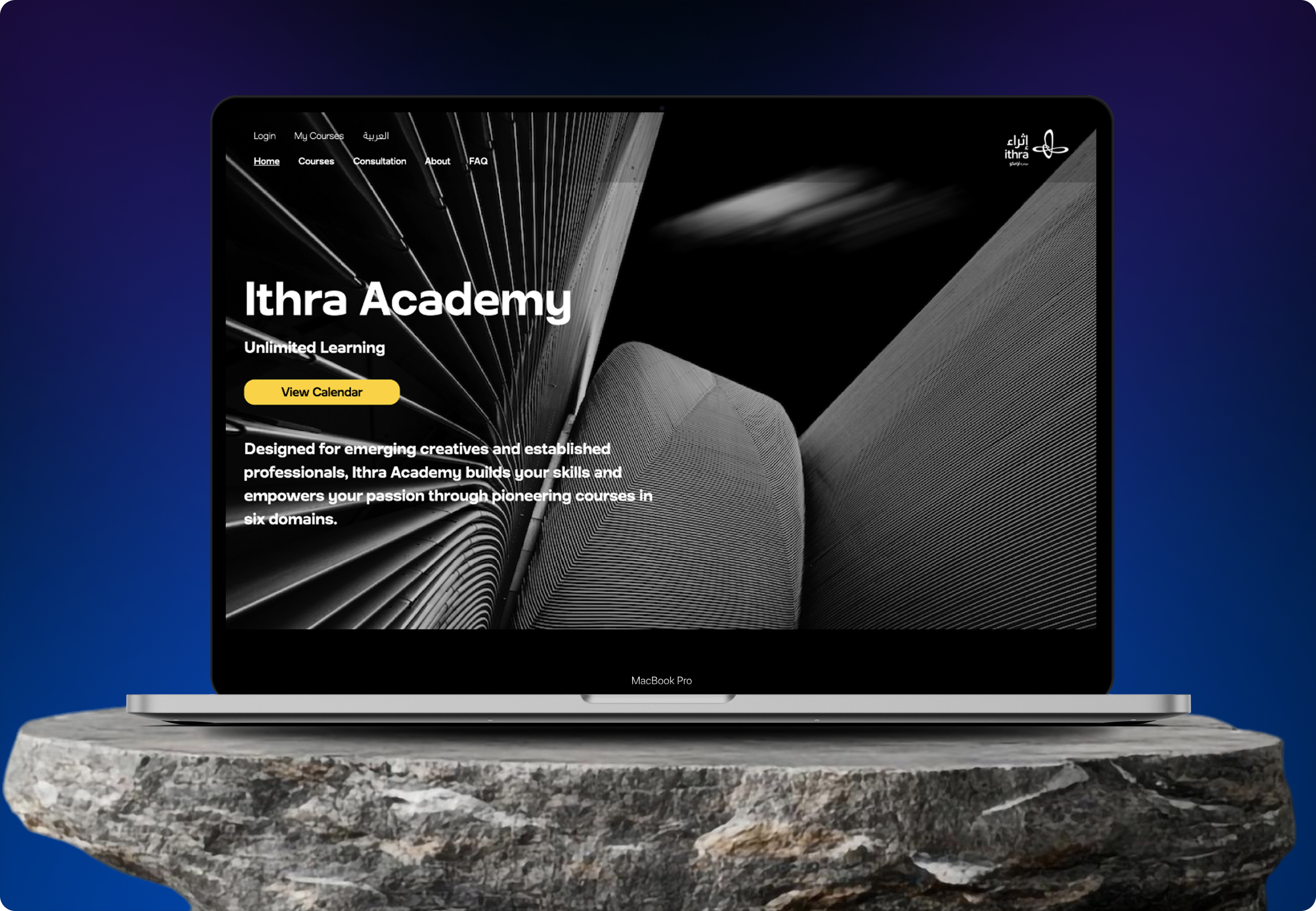
This project is a web based learning platform designed to provide users with access to a wide range of online courses across creative, technical, and professional domains.
The platform allows users to explore courses, enroll in learning programs, view schedules, and consult with experts or mentors related to specific fields. The primary goal of the platform is to create a seamless digital learning environment that combines course discovery, enrollment, and consultation within a single, cohesive website experience.

Online learning platforms often suffer from information overload, unclear course structures, and fragmented consultation processes. Users struggle to understand course relevance, schedules, and learning outcomes, while consultation offerings are frequently detached from the learning journey. This leads to confusion, reduced engagement, and difficulty converting interested users into enrolled learners.

The platform was designed as a unified learning ecosystem that integrates course exploration, enrollment, and expert consultation into one consistent experience. Users can easily browse available courses, view detailed course pages, understand learning objectives, check schedules, and enroll directly through the website. Consultation features are positioned as an extension of learning, enabling users to seek guidance related to specific domains without leaving the platform.
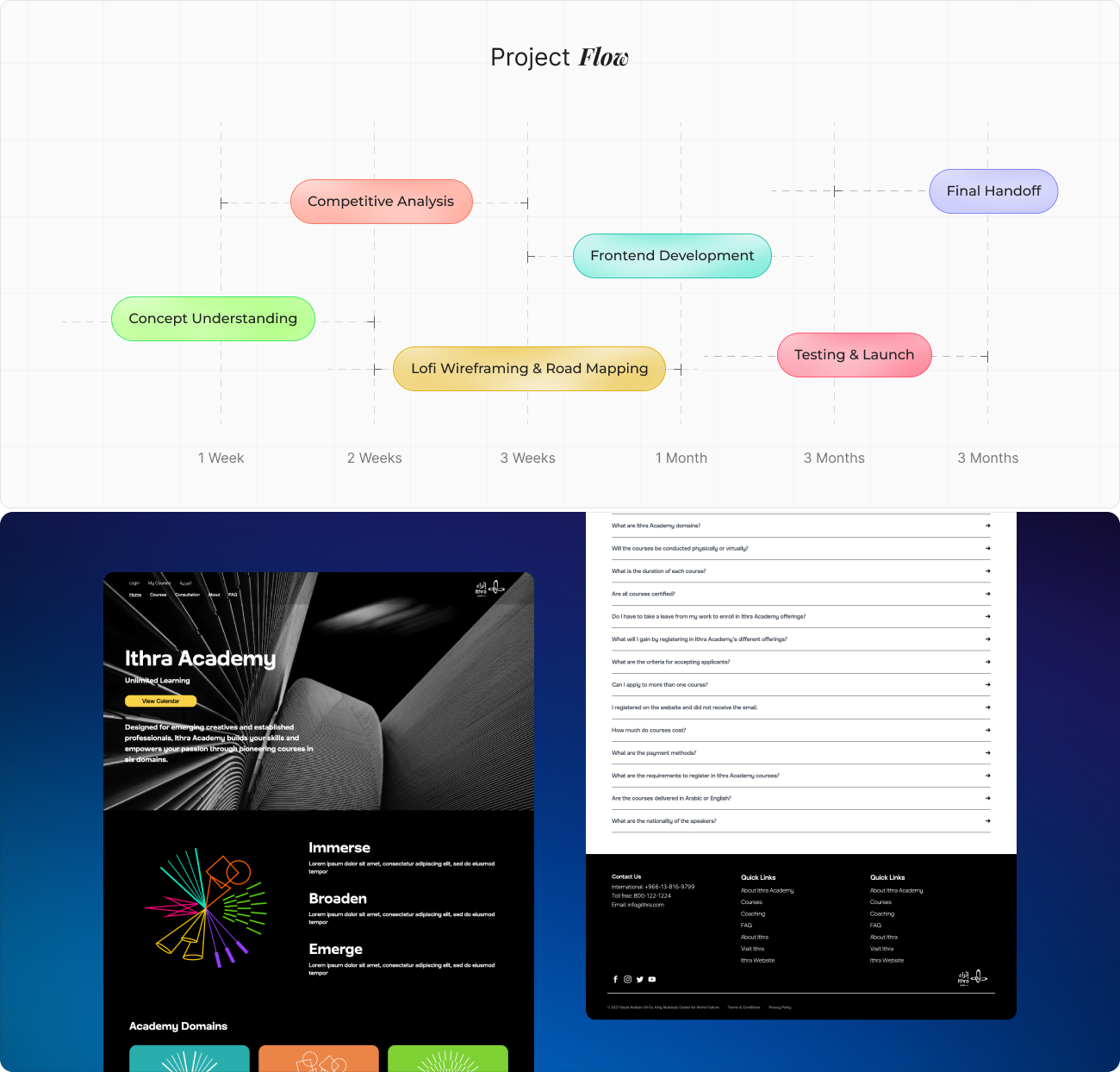
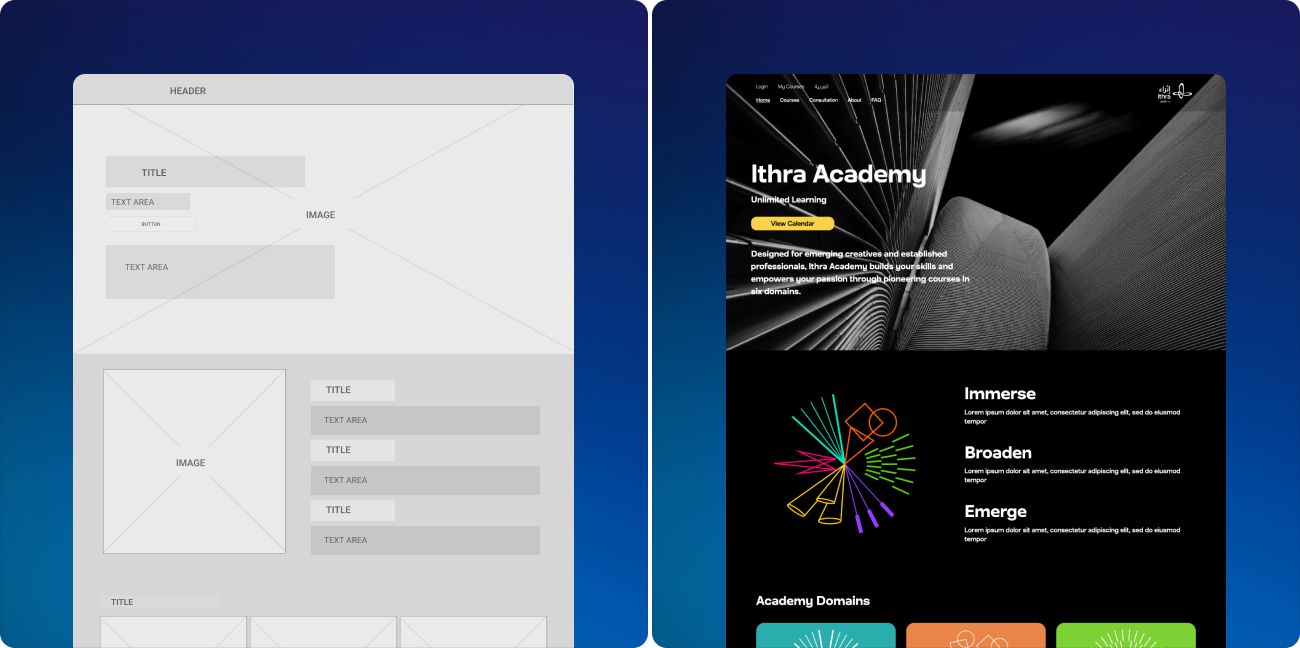
From a frontend development standpoint, the process began with analyzing finalized design files and breaking them down into reusable UI components and layout structures. Wireframe and design intent were translated into responsive layouts using a structured grid system. Special attention was given to alignment, spacing, typography scaling, and visual fidelity to ensure that the live website closely matched the design specifications while remaining adaptable across screen sizes.
While this project did not involve direct user research, frontend decisions were guided by common user behavior patterns such as scanning content, comparing courses, and navigating between informational pages.
Implementation choices prioritized readable typography, predictable navigation behavior, accessible interactions, and fast load times to support a smooth browsing experience for learners.
The frontend architecture follows a page based structure supported by modular components. Global elements such as the header, navigation menu, footer, and CTA components are shared across the platform to ensure consistency.
Page specific components such as course cards, domain sections, FAQ accordions, and consultation blocks are designed to be reusable and configurable. This architecture supports easier updates, future expansion, and consistent rendering across the site.
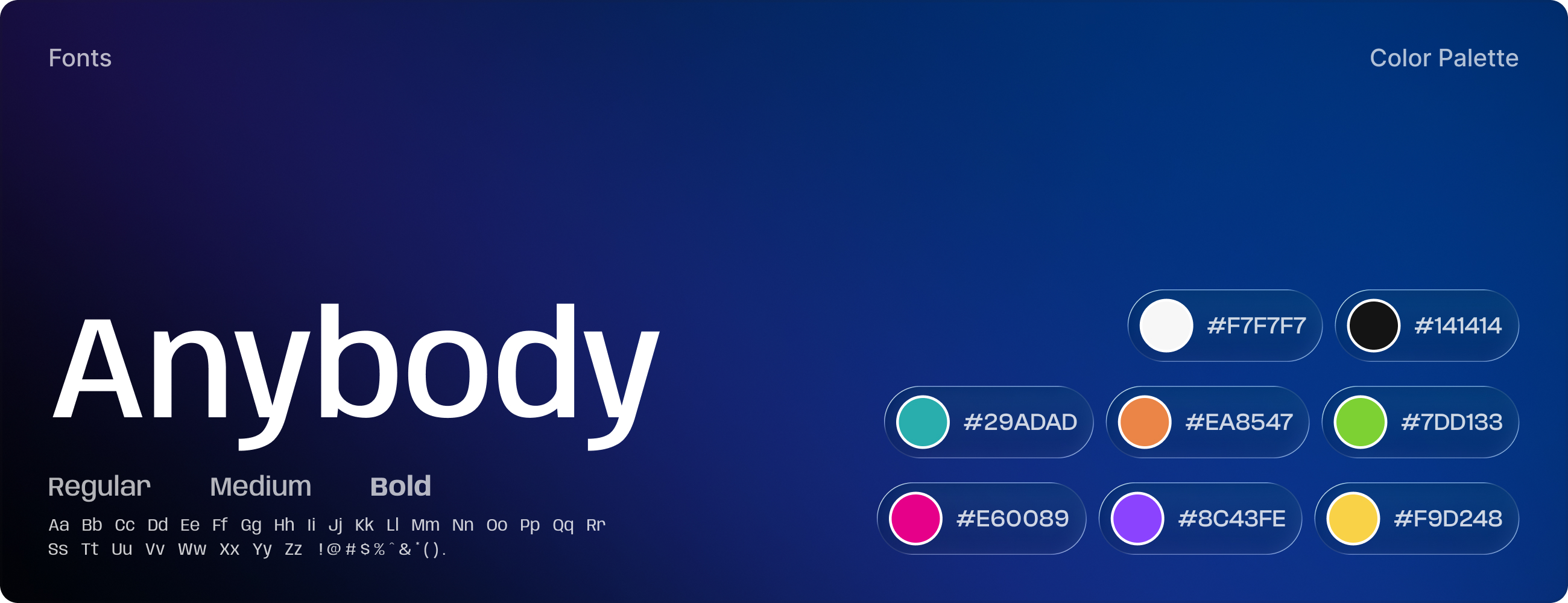
The style guide was implemented at the code level to ensure consistency across components and pages. Typography scales were defined for headings, body text, and labels, ensuring visual hierarchy and readability. The color palette was applied systematically for backgrounds, text, highlights, and action elements. Common UI patterns such as buttons, cards, and navigation elements were standardized to simplify maintenance and improve development efficiency.