



Neoja - Tournaments
About
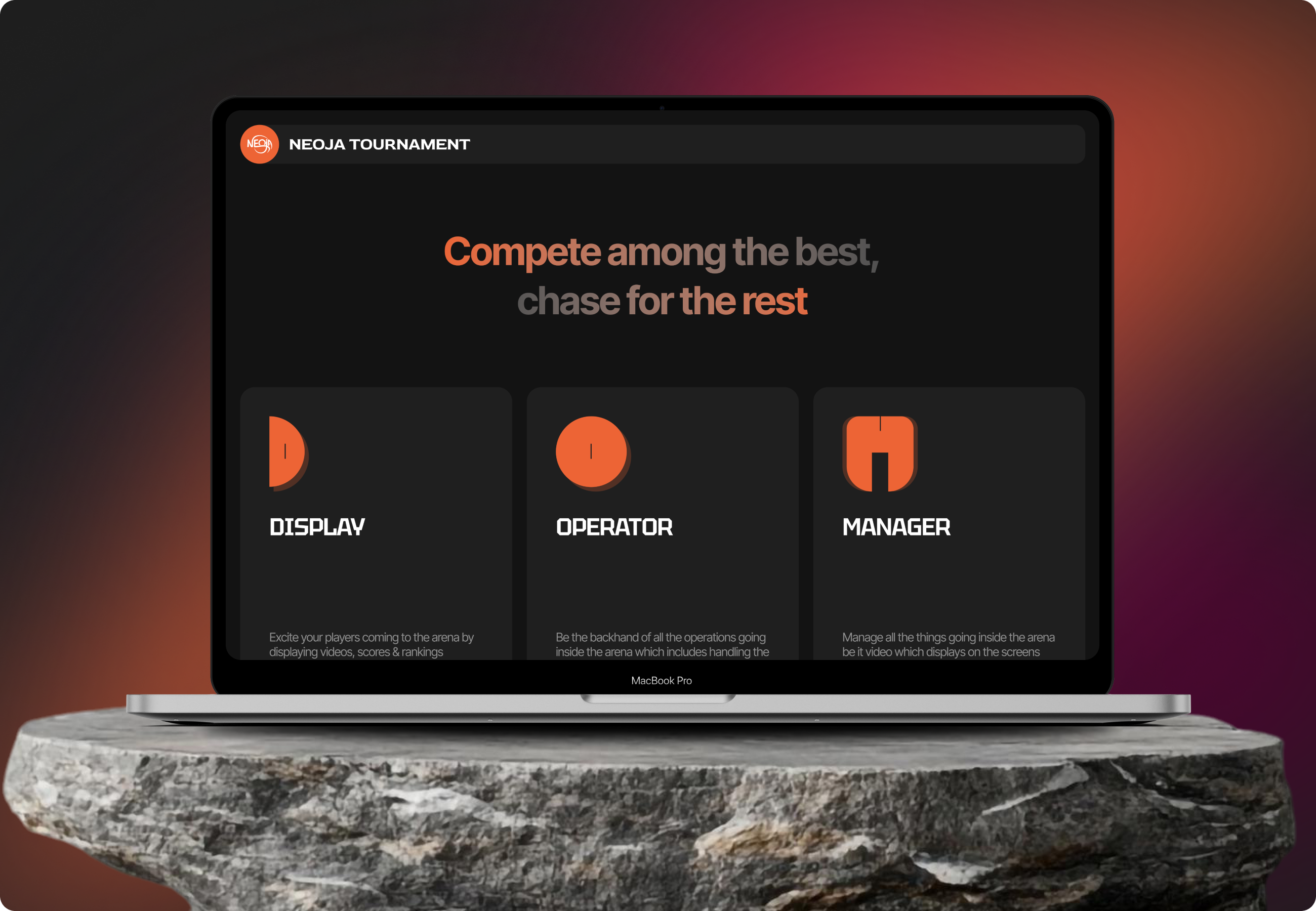
The project is a digital tournament management platform designed for a cafe integrated with a basketball court. The platform enables seamless management of teams, live scoring, and match progression while enhancing the in venue experience for players and guests.
It operates across admin dashboards, public display screens, and mobile interfaces, ensuring real time synchronization between gameplay and audience visibility. The system bridges physical sports activity with a digital layer that organizes, tracks, and showcases matches in an engaging and intuitive way.

Problem
Most local basketball tournaments still depend on paper sheets or WhatsApp messages to manage teams and update scores. This causes slow coordination, messy communication, and zero central visibility during live matches.

Solution
Neoja Tournament digitizes the entire workflow from player enrollment to live scoring under one unified dashboard. Organizers get real time control, teams get clarity, and audiences can follow scores instantly without confusion.
From Concept to
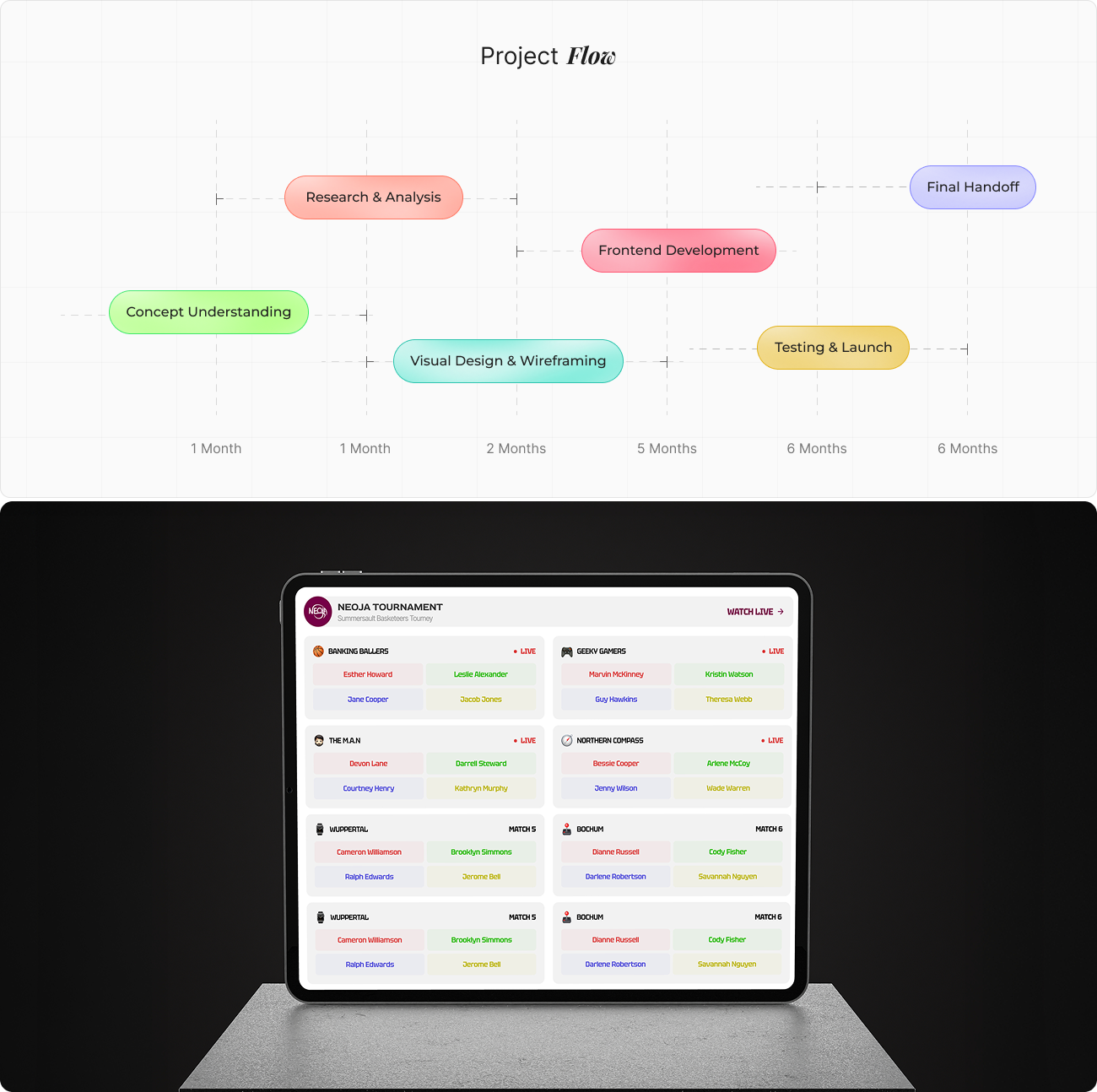
We mapped every touchpoint from team registration to final score submission, understanding how each user (admin / coach / scorer) interacts with the system across the tournament flow. This helped us identify friction points such as time lost in switching screens or searching for player data.
Based on this blueprint, we defined faster hand-offs between roles, clearer action hierarchies, and direct update pathways so every critical step (add player → assign match → update live score) becomes smooth, predictable, and aligned with real match time behavior.

User
We analyzed how tournament organizers currently manage player lists, match schedules, and score updates. Most processes were happening manually on paper/Excel, leading to delays, confusion, and missing updates during live matches. User interviews helped us understand what info must appear first and which actions must be simplest.
We also studied behavior patterns of coaches/referees who manage data during active games. They needed extremely fast input interaction and fewer steps. Insights from this research shaped an interface that reduces clicks, avoids overload, and keeps real-time updates clean and readable for everyone involved.
User Interface
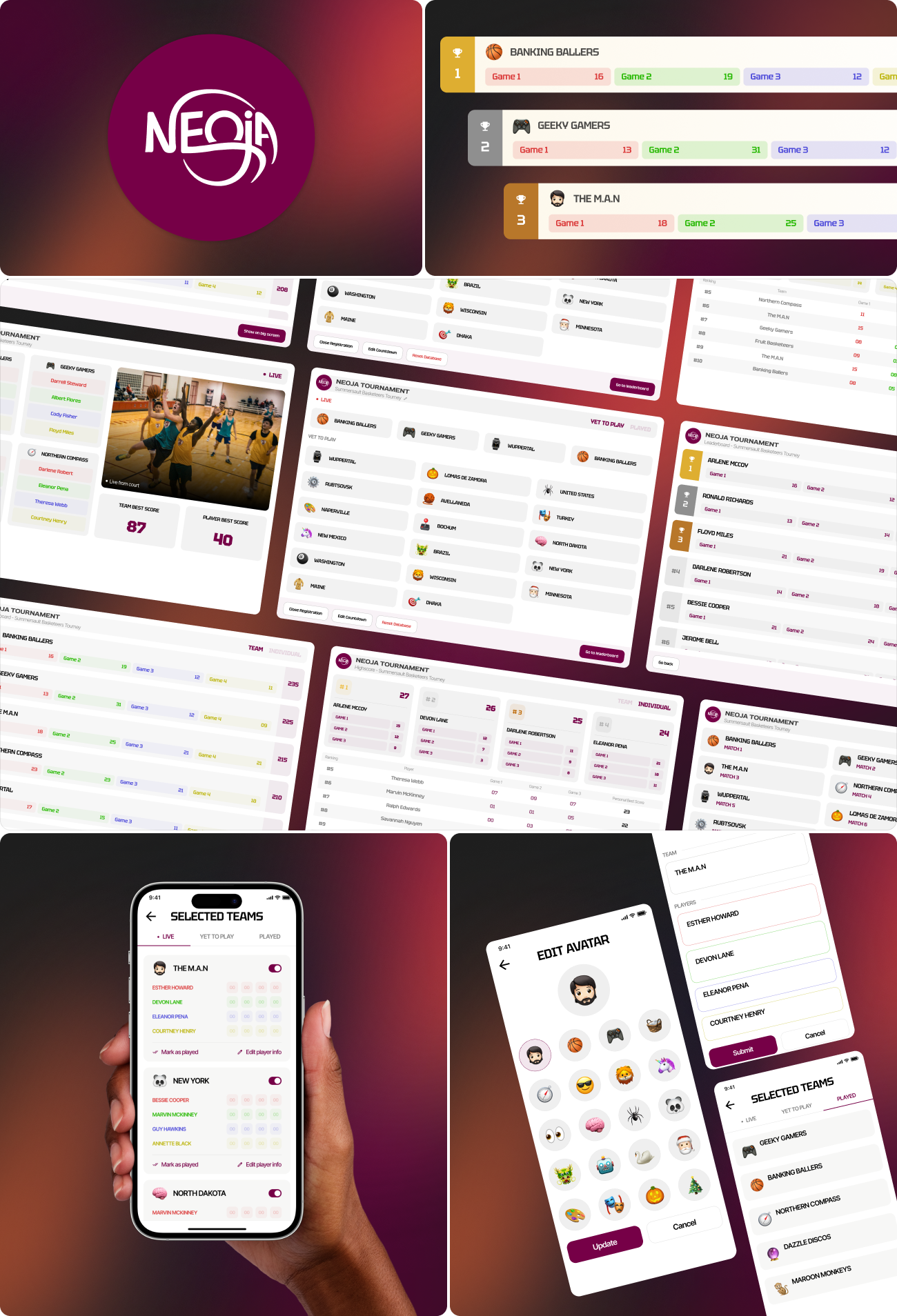
We structured the interface using a clean, modular design system where every screen is grouped by function Teams, Matches, Players, and Scores. Each module is separated but connected through a unified navigation layer, so users can switch context without losing their current state.
The architecture prioritizes clarity → primary actions stay on top, match level updates remain directly accessible, and score inputs open instantly. This reduces steps per action, keeps decisions low friction, and ensures real time score editing stays fast and error free during live play.
Style
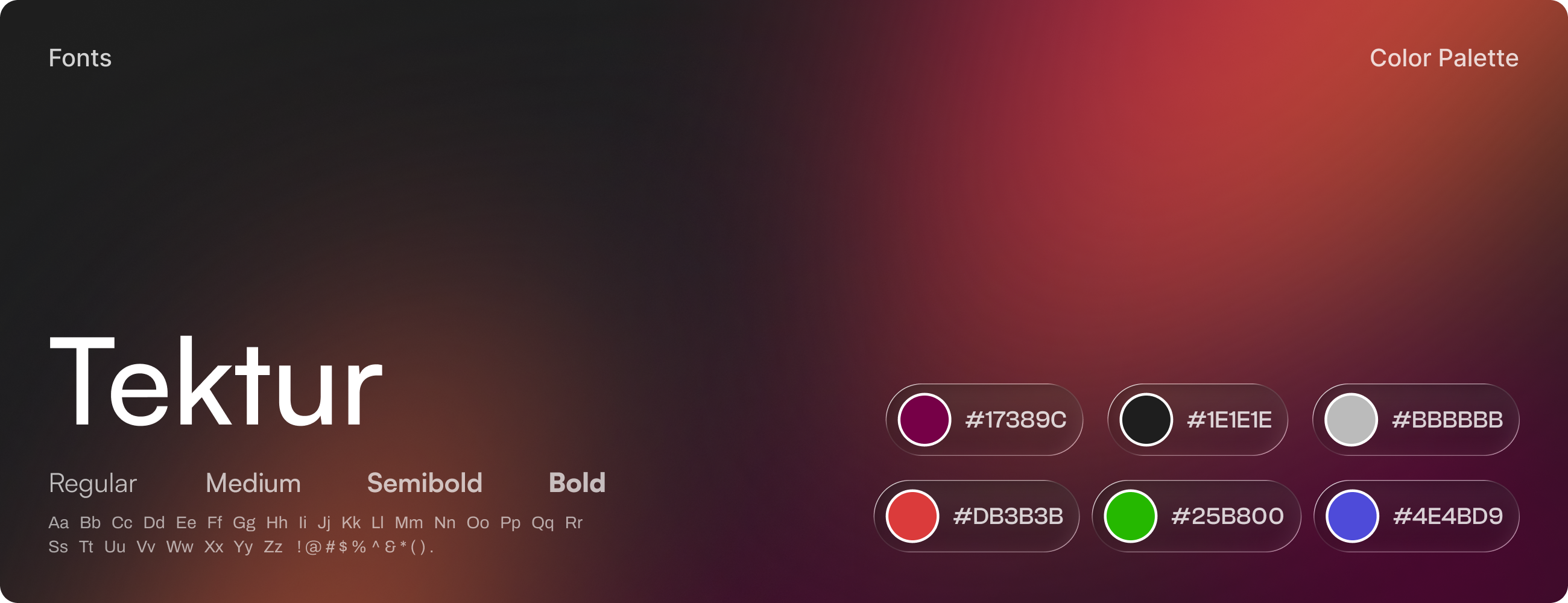
The visual system focuses on clean typography, bold numeric visibility for scores, and balanced spacing that keeps each update readable even during fast match moments. Soft gradients and rounded cards maintain a sporty but minimal identity that feels modern and easy to follow.
The build structure supports real time updating, smooth screen transitions, and lightweight interactions keeping every action fast, responsive, and stable throughout the entire tournament flow.
Software



