Maksellent

About
This project is a multi platform business services ecosystem designed to support organizations across operations, asset management, surveys, idea management, documentation, user management, and field services.
The platform acts as a centralized digital workspace where businesses can manage internal workflows, assets, people, and data through a unified interface across web and tablet experiences. The scope of work focused on designing and developing a scalable, modular UI system and translating complex business workflows into intuitive, production ready frontend interfaces.

Problem
Businesses using multiple tools for operations, assets, surveys, and internal collaboration often face fragmented experiences, inconsistent UI patterns, and inefficient workflows. Existing platforms either lacked flexibility, became visually overwhelming as features scaled, or failed to maintain consistency across different service modules.

Solution
A modular, platform first design system was created that allows different services (task management, asset fixing, surveys, idea management, accounts, and file handling) to coexist within a single ecosystem. The frontend was built with reusable components, role based navigation, and consistent interaction patterns.
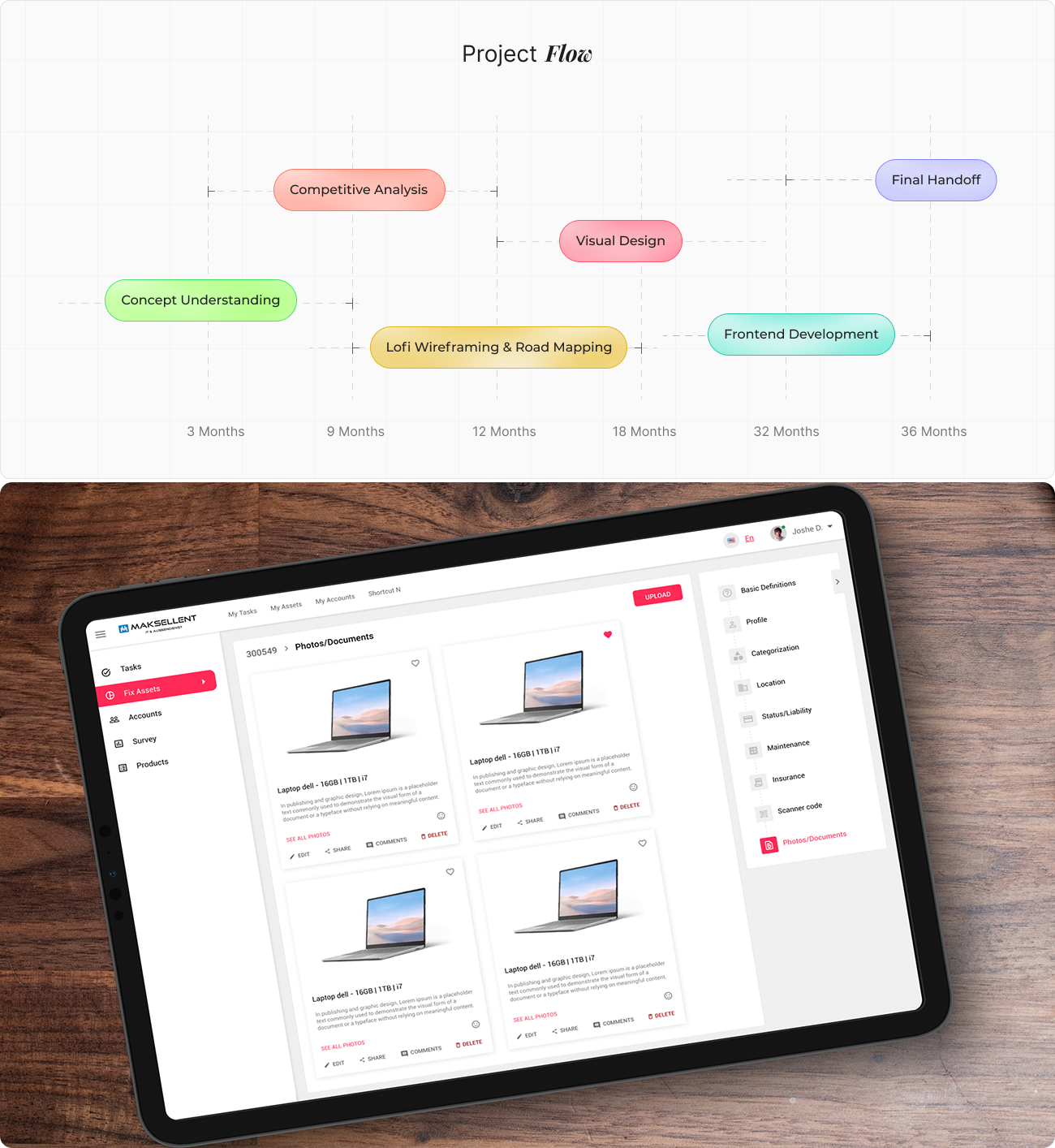
From Concept to
The process started with understanding business workflows and identifying common patterns across services. Low fidelity wireframes were used to map user journeys, navigation depth, and content hierarchy.Once validated, high fidelity UI screens were designed with a strong focus on clarity, spacing, and component reusability.
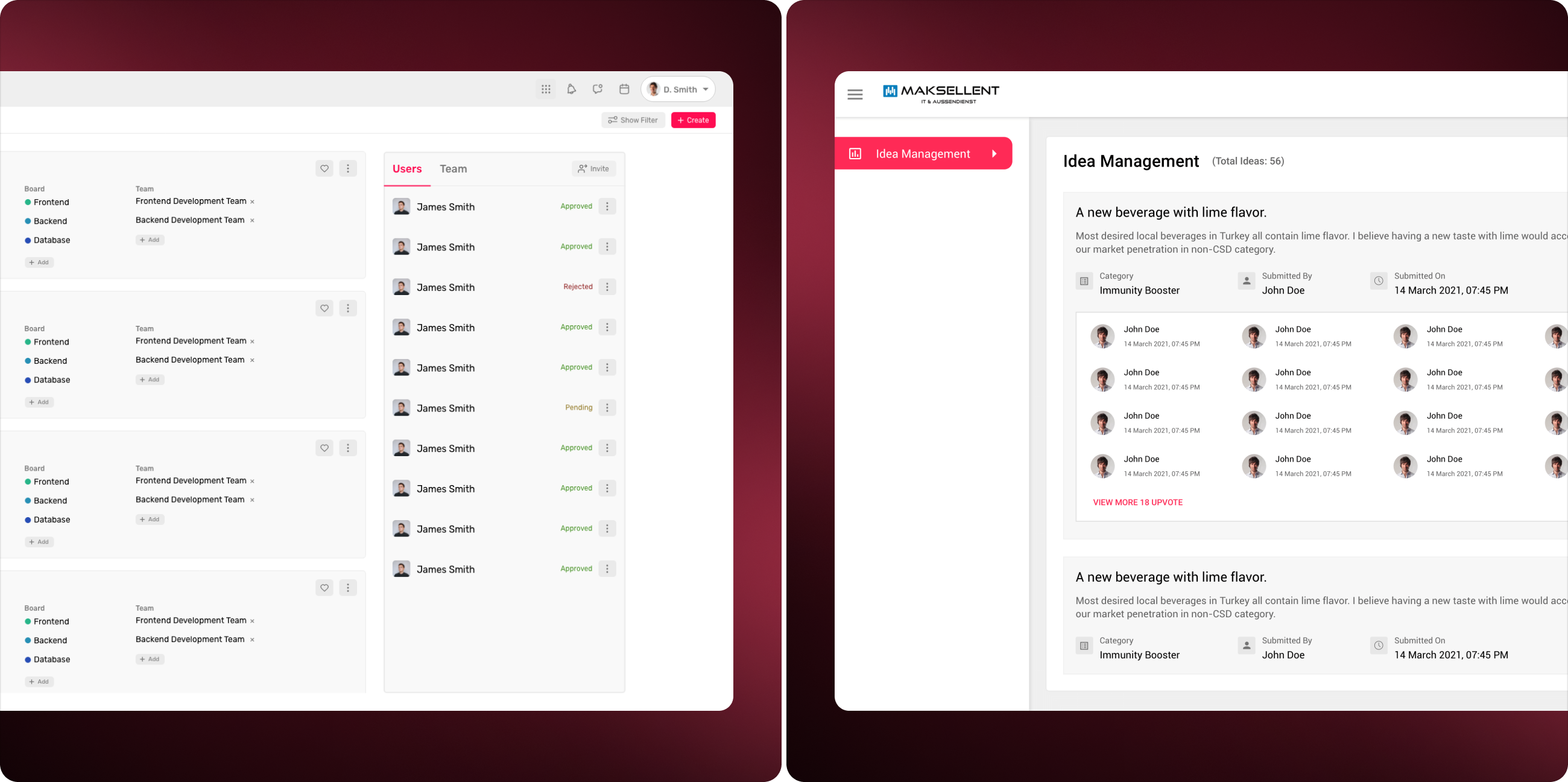
User
The platform is built on a modular and scalable user interface architecture that supports multiple business services within a single ecosystem. A shared application shell provides consistent navigation, layout structure, and global controls across all modules, allowing users to move seamlessly between tasks, assets, surveys, idea management, and account related services.
The architecture is role aware, adapting navigation and available actions based on user permissions such as admin, operator, or manager. Reusable UI components like tables, forms, cards, and modals ensure visual and functional consistency while reducing frontend complexity.
User Interface
A unified brand experience was established to ensure visual and behavioral consistency across all platforms and services. The design language balances professionalism with approachability, using consistent layouts, spacing rules, iconography, and interaction feedback.
Regardless of the module - whether managing assets, ideas, or surveys, the platform maintains a cohesive look and feel, reinforcing trust and reducing friction as users move between different business functions.
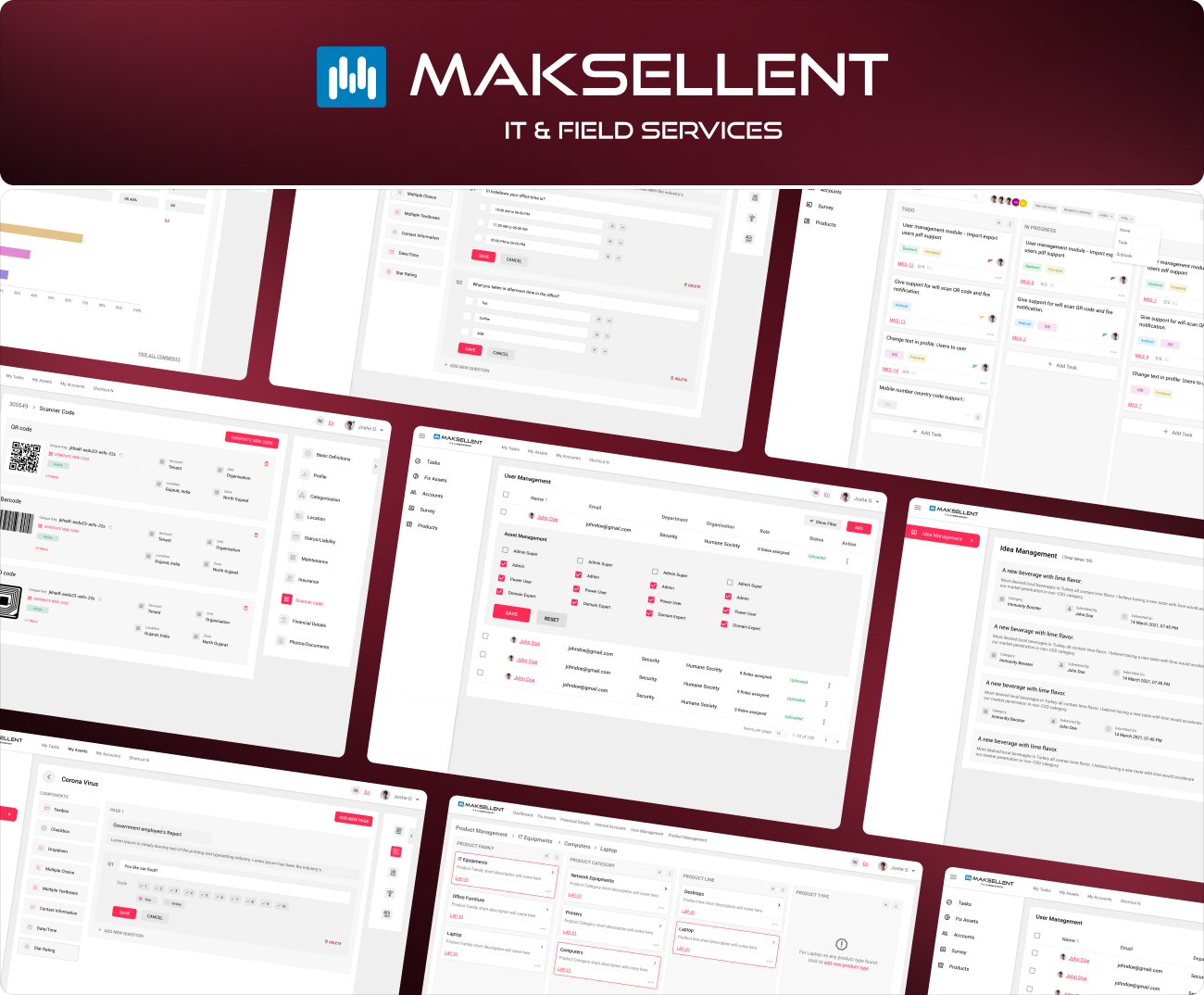
Style
The style guide defines a cohesive visual system designed for clarity, scalability, and data heavy business workflows. A neutral color palette forms the foundation of the interface, with accent colors used purposefully to highlight actions, statuses, and system feedback.
Typography is optimized for readability across dashboards, tables, and forms, with a clear hierarchy that guides attention and improves information scanning. Consistent spacing, grid systems, and alignment rules create a balanced and structured layout across all screens.

Software