Drongo Invoice
About
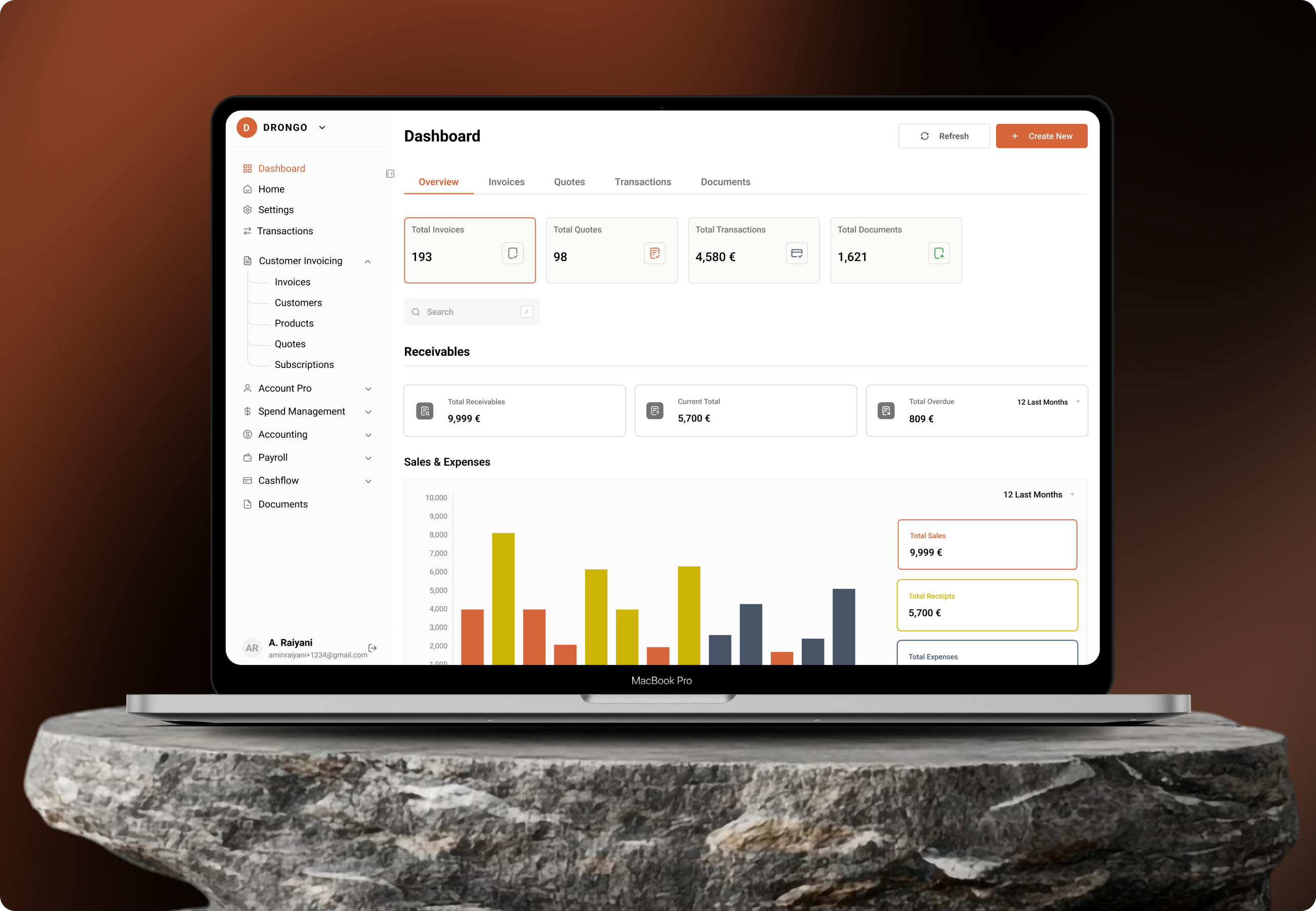
This project is a comprehensive invoicing and financial operations platform designed to help businesses manage invoices, quotes, transactions, documents, and bank accounts from a single interface.
The platform supports end-to-end invoice workflows from creation and customization to payment tracking and document storage, while offering real time financial insights through dashboards and reports.

Problem
Many invoicing tools suffer from fragmented workflows, forcing users to switch between multiple screens or external tools to manage customers, payments, documents, and accounting data. Users often struggle with poor visibility into receivables, overdue invoices, and transaction histories, while complex invoice creation forms slow down daily operations. Additionally, inconsistent UI patterns across dashboards, documents, and financial modules increase cognitive load and reduce efficiency, especially for users handling large volumes of invoices.

Solution
The platform centralizes all invoicing and financial activities into a unified, role-based system that simplifies invoice creation, tracking, and reporting. Users can generate invoices and quotes, monitor payment status, manage customers, and access transaction histories from a single dashboard. Visual summaries, structured forms, and contextual actions reduce friction during invoice creation, while integrated document management and bank account linking provide end-to-end financial clarity without leaving the platform.
From Concept to
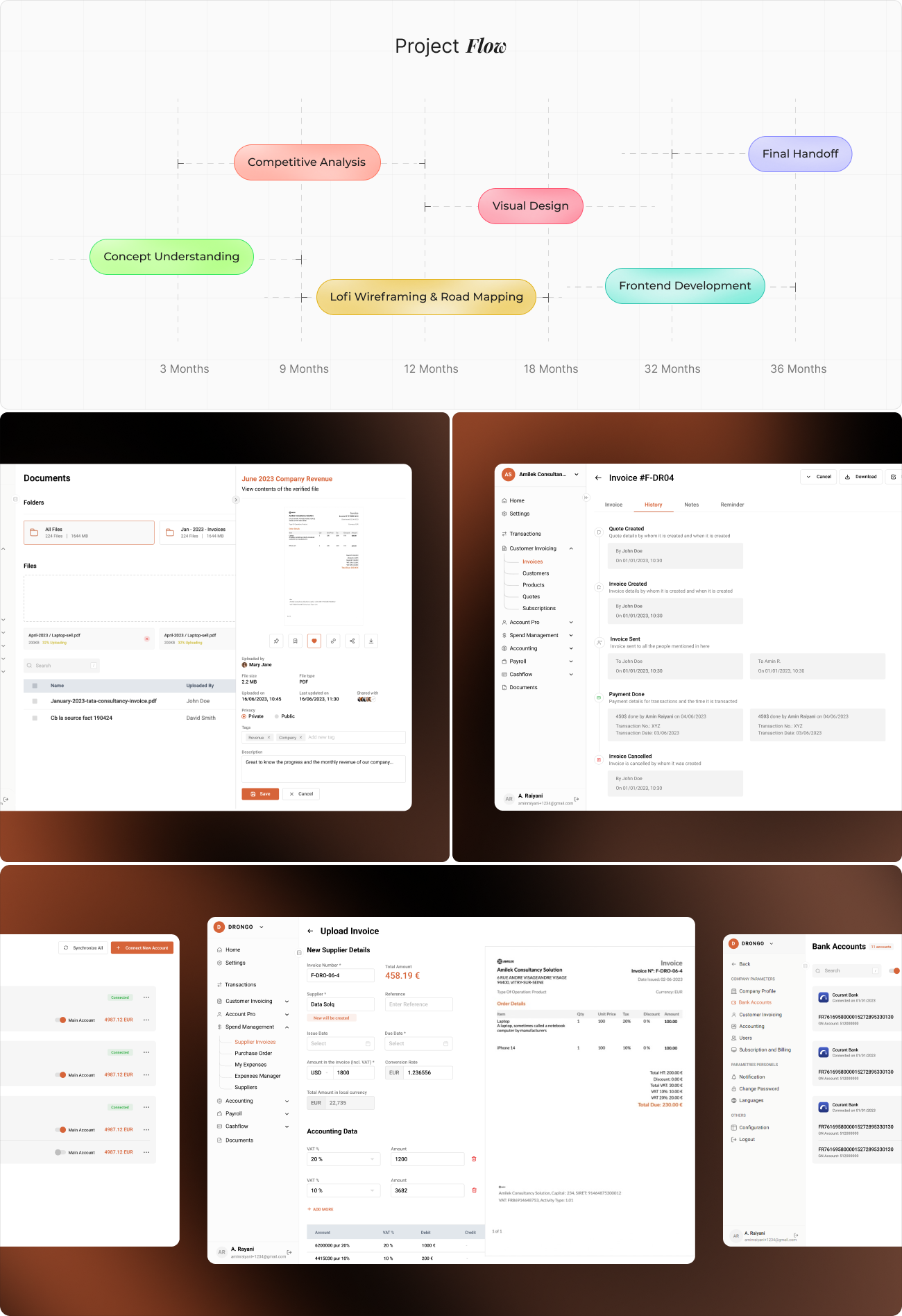
The design process began by mapping real world invoicing workflows, identifying key touchpoints such as invoice creation, approval, payment confirmation, and document storage. Low fidelity wireframes focused on form clarity, information hierarchy, and dashboard readability. These evolved into high fidelity interfaces with modular layouts, data driven components, and responsive tables optimized for financial use cases.
User
User research focused on business owners, accountants, and finance teams who manage recurring invoices and track payments regularly. Key insights revealed a strong need for quick invoice creation, clear payment status indicators, and easy access to historical records.
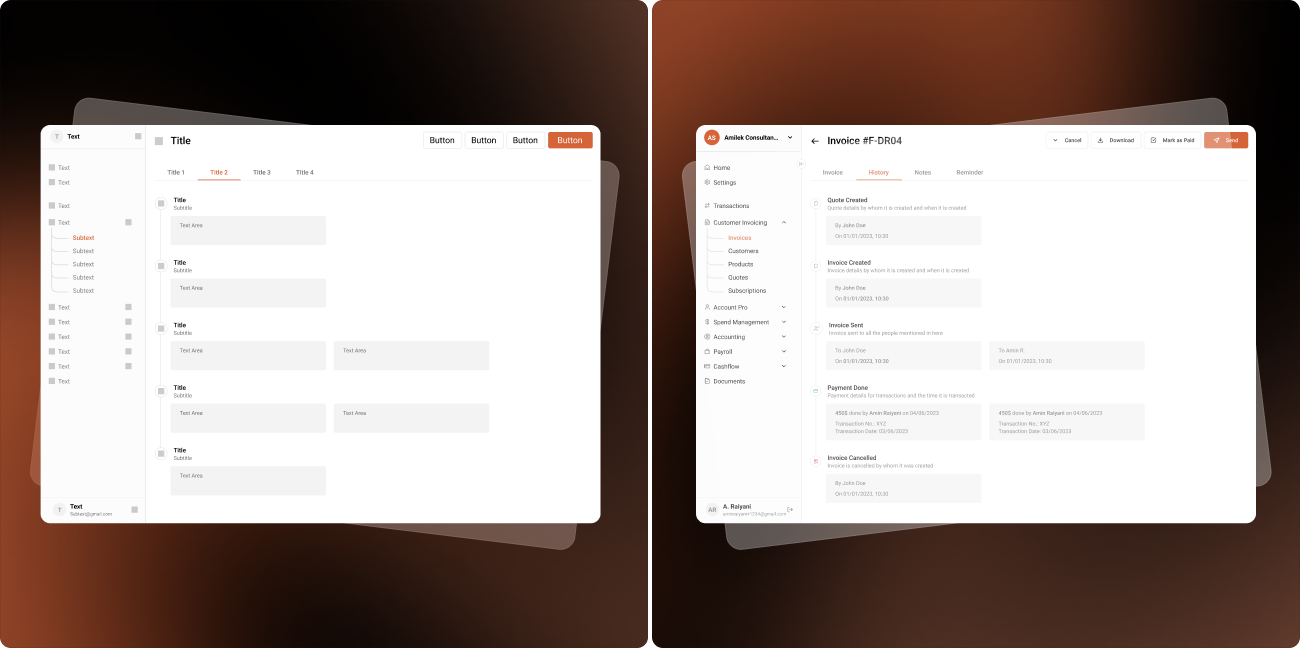
Users also valued transparency in transaction timelines and the ability to preview documents before sharing. These findings directly influenced design decisions such as inline validations, step based invoice forms, timeline views for invoice history, and searchable document libraries.
User Interface
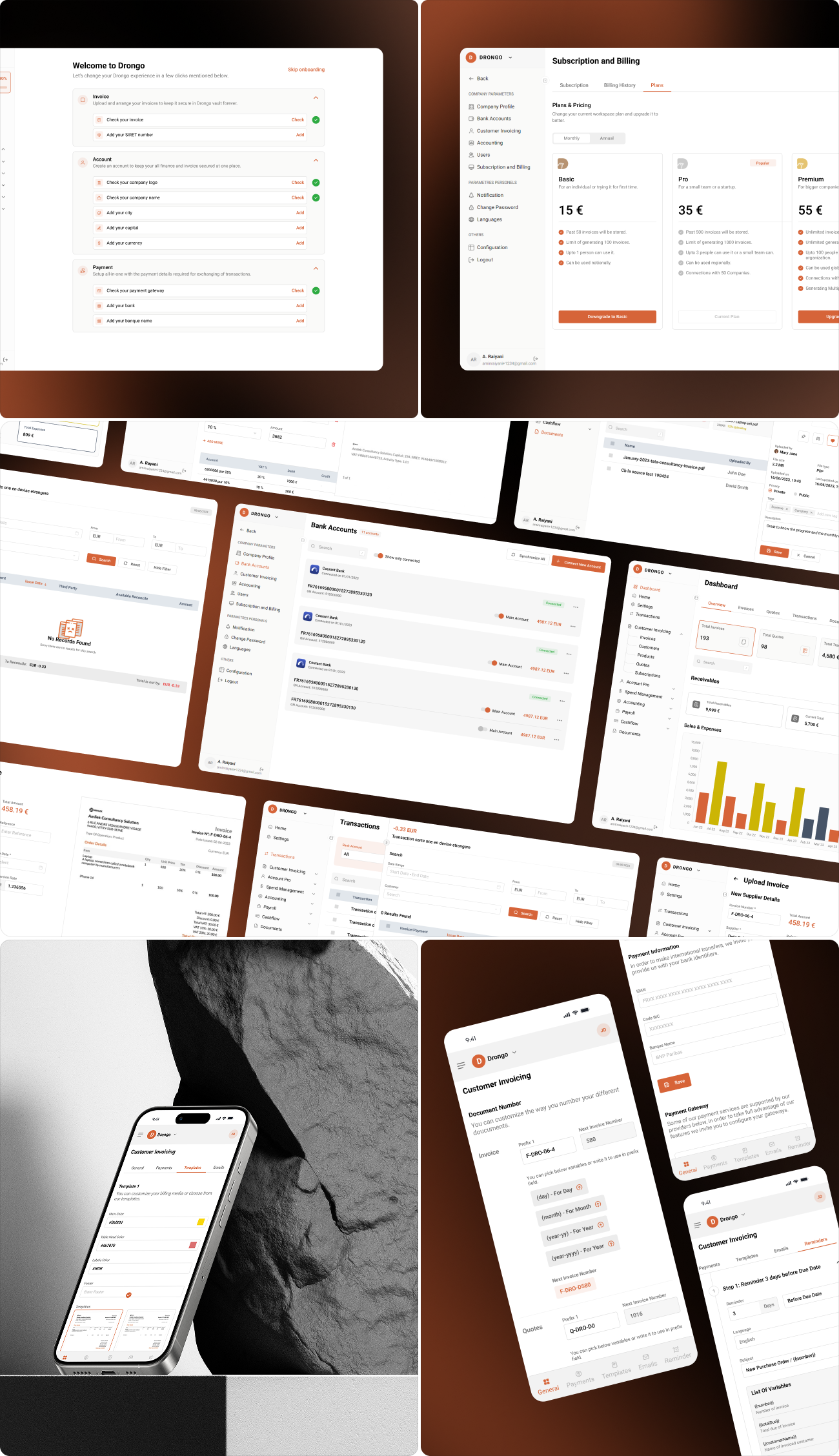
The UI architecture is structured around core financial modules - Dashboard, Invoices, Quotes, Transactions, Documents, and Settings each accessible through a persistent navigation system. The dashboard serves as the central overview, summarizing financial health, receivables, and expenses.
Detail pages follow a master detail pattern, allowing users to view, edit, and audit invoice data without losing context. Shared components and standardized layouts ensure consistent behavior across modules while enabling future feature expansion.
Style
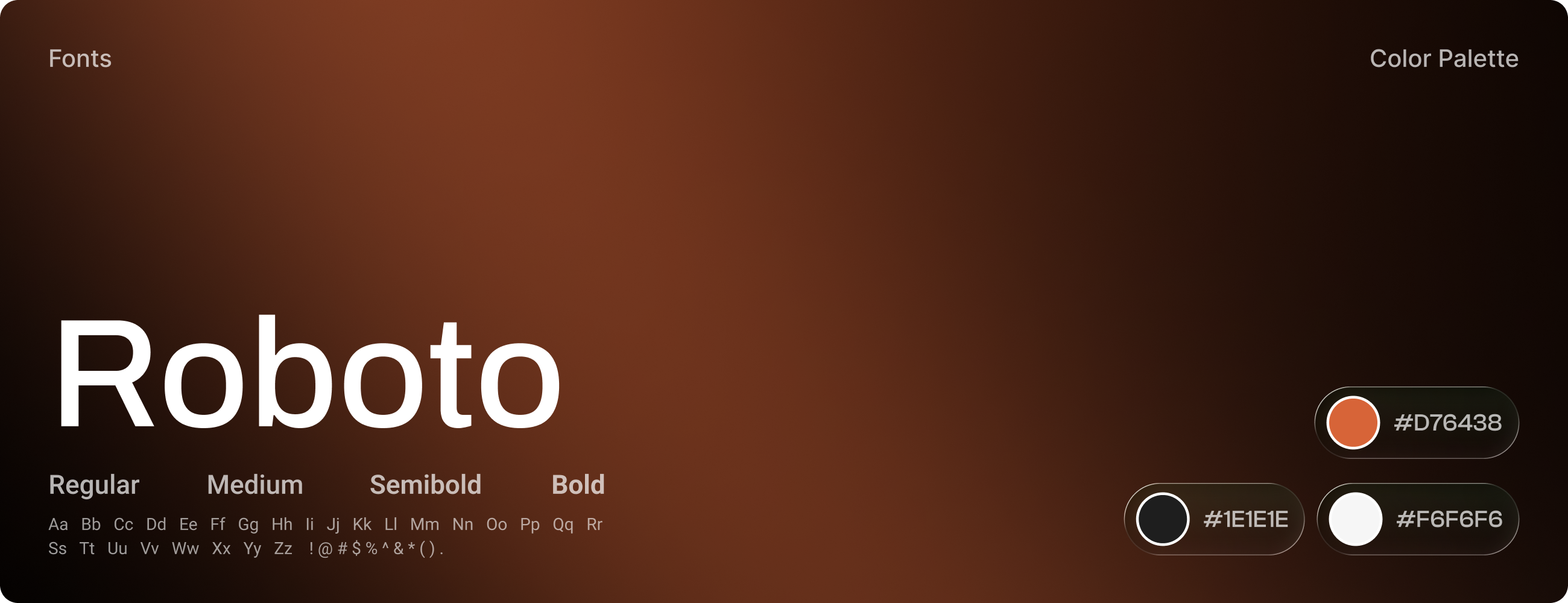
The style guide defines a structured design system built for data heavy financial interfaces. A clean, neutral color palette is paired with warm accent colors to highlight actions, statuses, and key metrics such as paid, pending, and overdue invoices.
Typography choices emphasize legibility and consistency across dense tables, forms, and dashboards. Standardized components, buttons, input fields, tables, cards, and status indicators ensure visual consistency and faster frontend development. Spacing, iconography, and interaction states are clearly documented to support scalability and maintain a polished, unified look as the platform evolves.
Software