Get in touch
Work location
B-810/811, World Trade Tower (WTT), Makarba, Sarkhej Gandhinagar Highway, Ahmedabad,
Gujarat, India, 380015

Social link

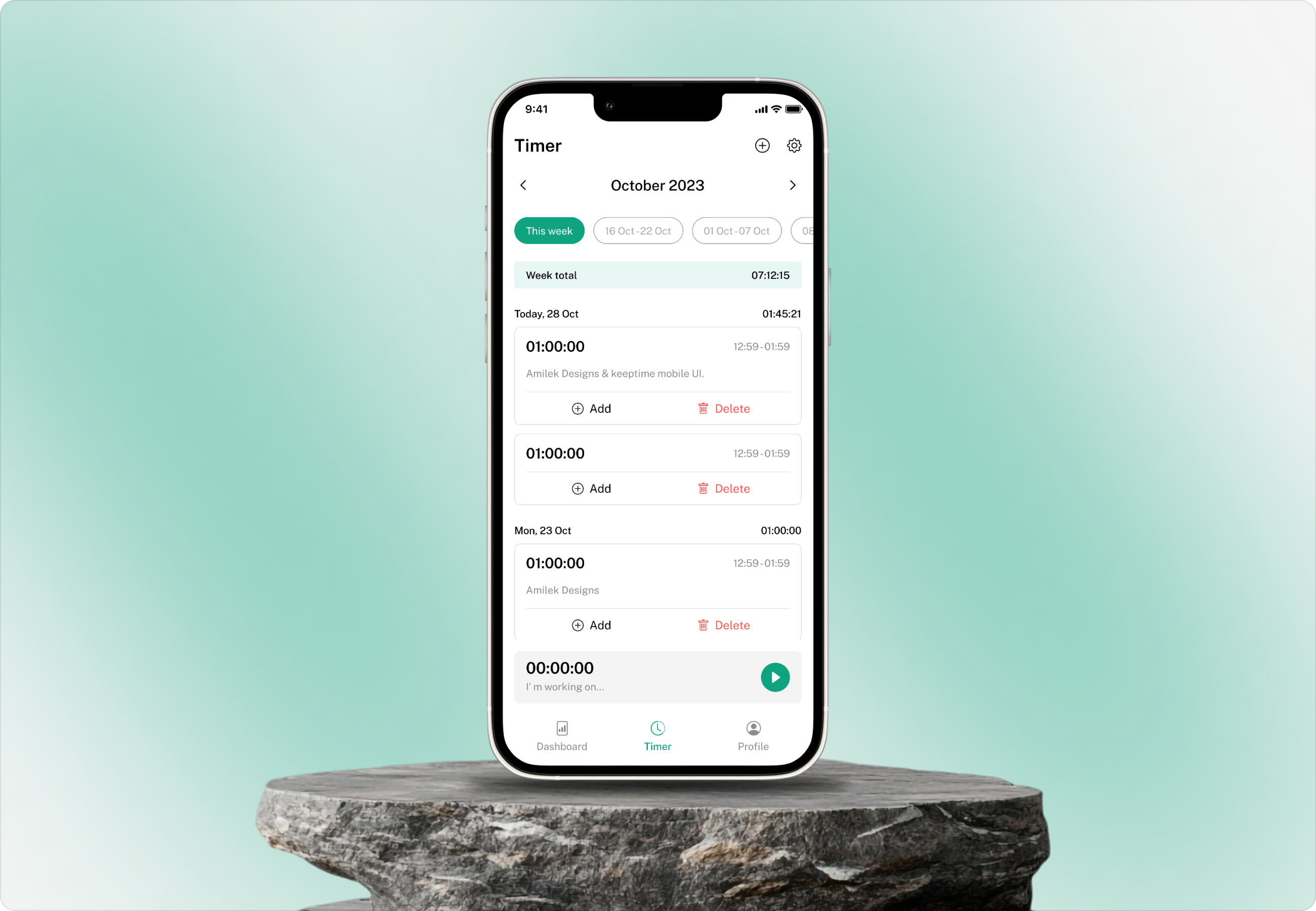
This project is an HRMS platform designed to help organizations manage employee time, attendance, and work records through a unified digital system.
The platform supports daily punch-in and punch-out, manual and automatic time logging, task and project association, and time summaries at daily, weekly, and monthly levels. It is built to serve both employees and administrators within the same ecosystem, offering a consistent experience across mobile and web interfaces.

Traditional time tracking and HR processes often rely on fragmented tools, manual entries, or spreadsheets, leading to inaccurate records and low transparency. Employees struggle to track their working hours and task allocations clearly, while HR teams face challenges in monitoring attendance, utilization, and time compliance across teams.

The platform introduces a centralized HRMS solution where time tracking, task logging, and attendance management are integrated into a single workflow. Employees can easily start and stop timers, log work sessions, associate tasks or projects, and review their time history. Administrators gain structured visibility into employee working hours, utilization patterns, and attendance records through clear dashboards and summaries.
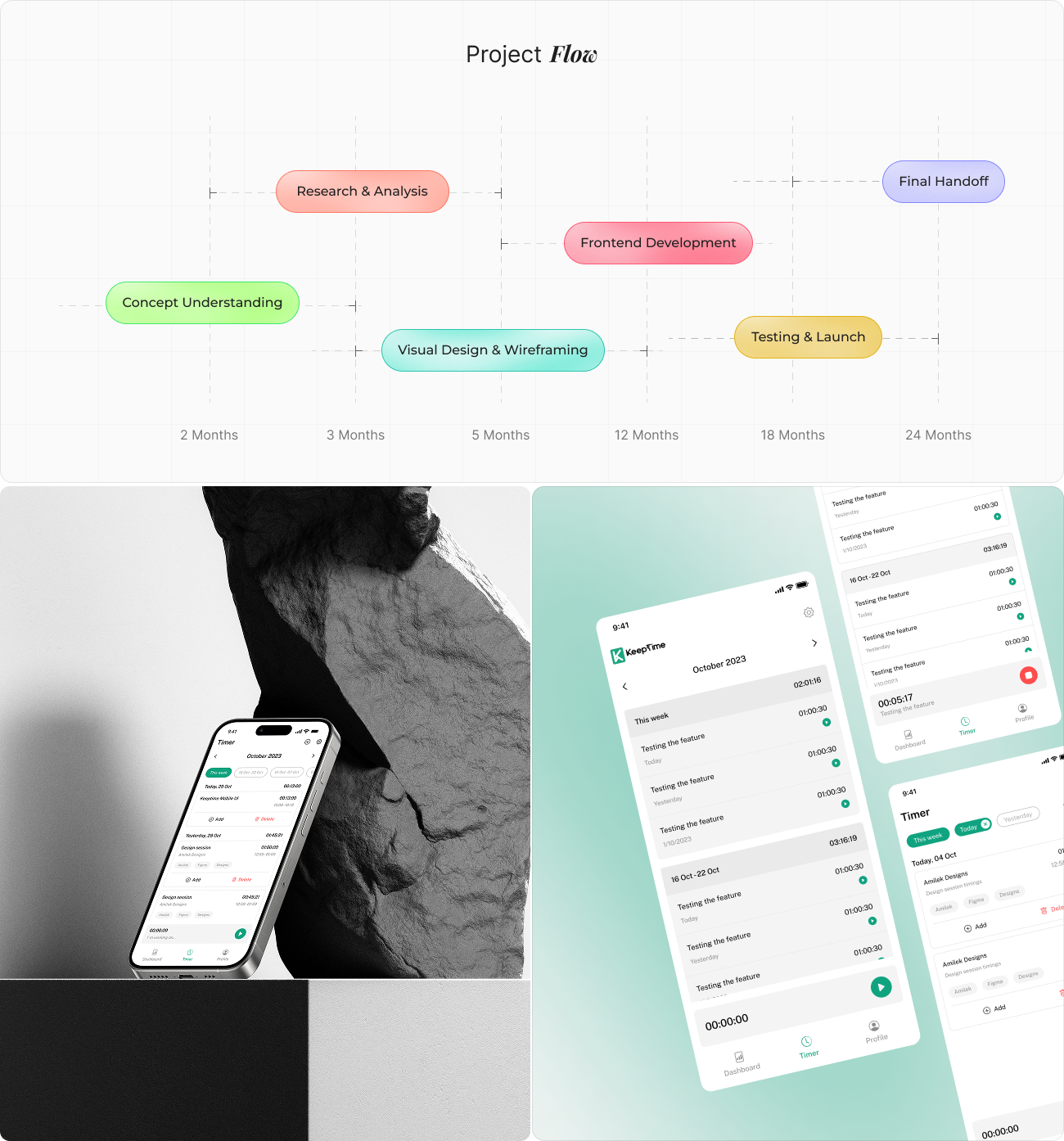
The platform introduces a centralized HRMS solution where time tracking, task logging, and attendance management are integrated into a single workflow. Employees can easily start and stop timers, log work sessions, associate tasks or projects, and review their time history. Administrators gain structured visibility into employee working hours, utilization patterns, and attendance records through clear dashboards and summaries.
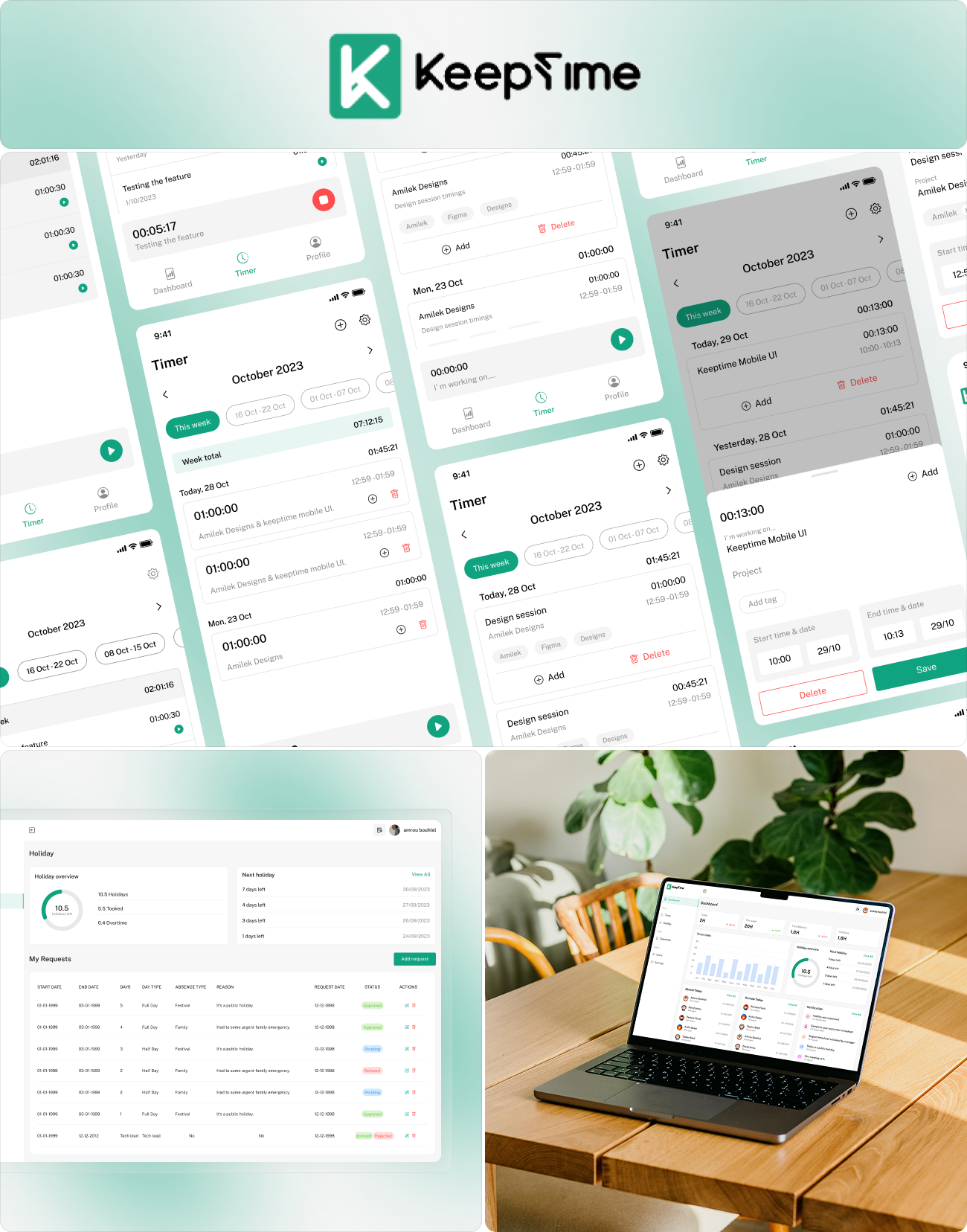
These concepts were translated into clean, minimal interfaces that highlight active timers, weekly summaries, and logged sessions. Frontend implementation ensured smooth transitions between views, responsive layouts, and real time visual feedback for time-based interactions.
User research concentrated on understanding how employees and HR teams interact with time tracking tools throughout the workday. Insights revealed that employees prefer fast, distraction free actions for starting and stopping work, along with clear confirmation that time is being tracked correctly.
HR users prioritized accuracy, auditability, and easy access to historical data. These insights informed decisions around simplified controls, visible status indicators, and structured time logs.
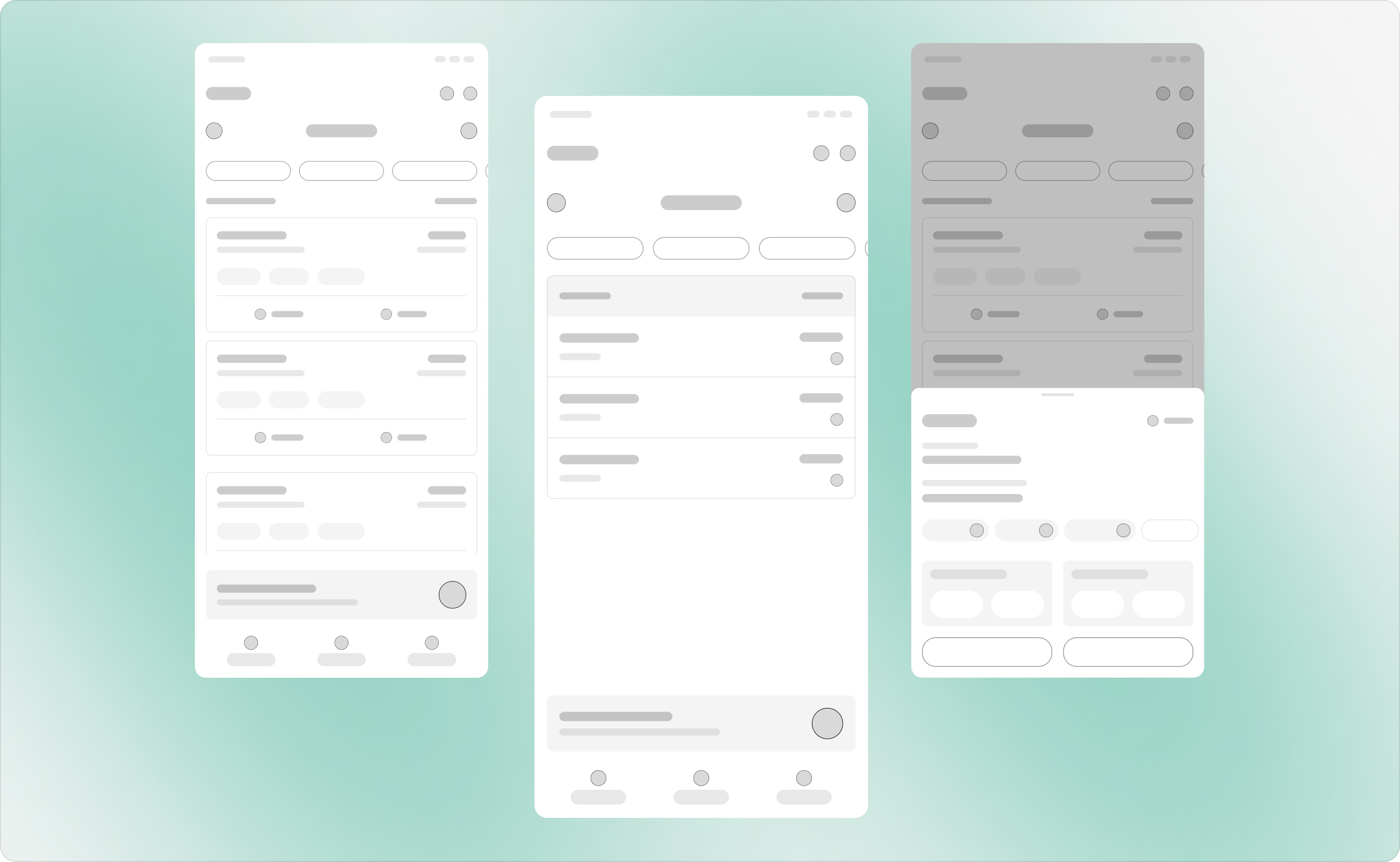
The user interface architecture is designed around task-based navigation and clear hierarchy. Core sections such as dashboard, timer, logs, and profile are easily accessible through persistent navigation.
The timer screen acts as the primary interaction point for employees, while summary views organize time data by day, week, and month. Data heavy views are broken into scannable cards and lists, ensuring clarity without sacrificing depth. This architecture supports scalability while keeping everyday actions intuitive.
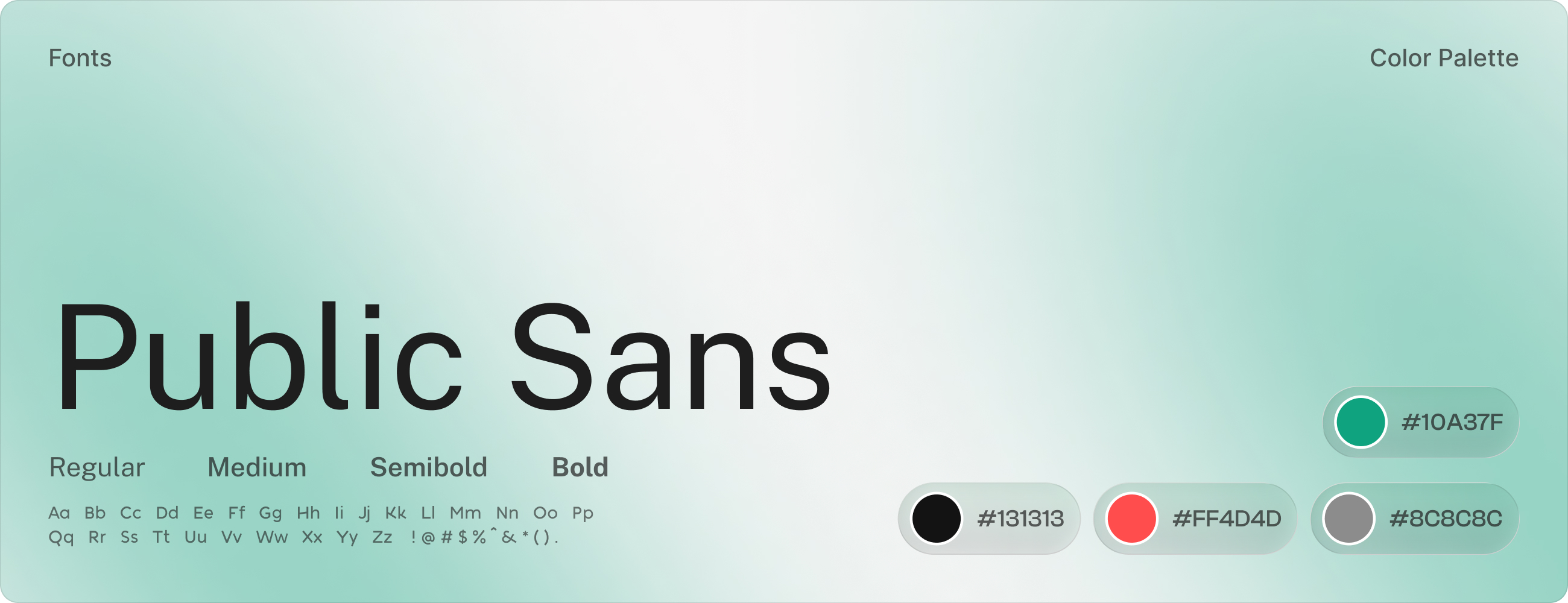
The style guide defines a consistent design system across mobile and web platforms. Typography is optimized for readability across time based data and long lists, with clear hierarchy for timestamps, labels, and summaries.
A soft, balanced color palette supports extended usage without visual fatigue, while accent colors highlight interactive elements and system feedback. Standardized components such as buttons, cards, input fields, and status indicators ensure visual consistency and efficient frontend development.